Published return settings, venue information and legal limits help separate verifiable details from assumptions about play.
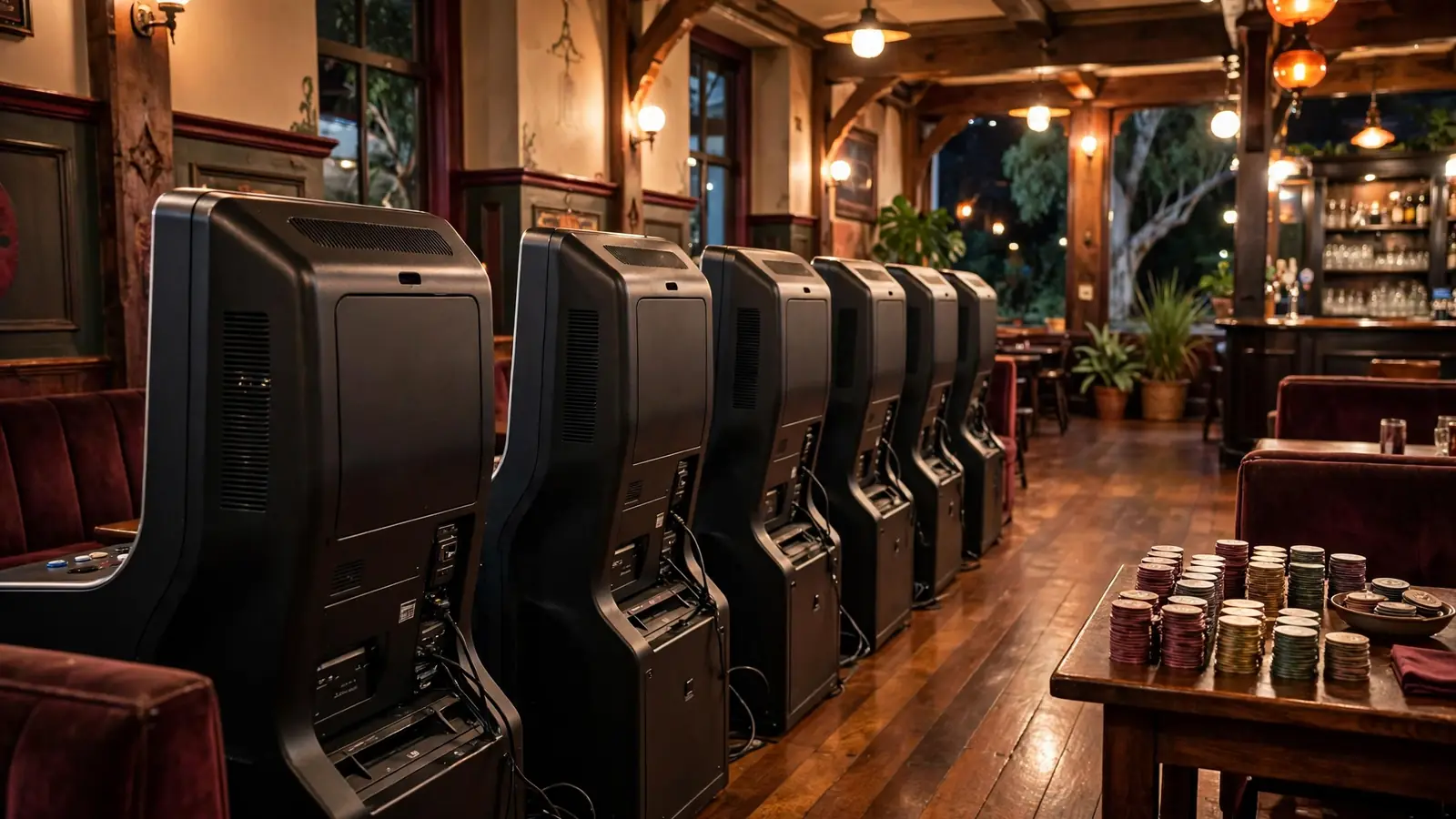
“Best” only means something once you name the criterion. A pokie that suits one player’s preferences may not suit another’s, and a label such as “best paying” is not proof that a particular game will return more to you during a visit. For a useful comparison, separate details you can check—such as the published return setting and the game’s rules—from expectations about what a future spin will do.
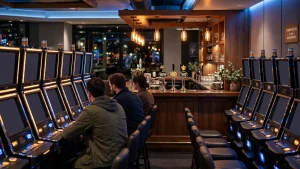
That distinction matters when comparing pokies in South Australia, whether you are considering a venue in the CBD or elsewhere. A title’s name alone cannot settle the question. Nor does a familiar theme or a prominent position on a machine floor establish its return setting. The comparison should be based on information attached to the specific version available at the venue, not on assumptions carried over from another casino.
A specialist review has reported that some game providers let casinos choose between multiple return-to-player settings for the same pokie. In practical terms, one title may be configured with different return percentages at different casinos. So a figure found in a general game description may not establish the setting used on a particular machine.
If you’re looking for pokies options while in South Australia, use this list as a starting point and check the details that matter to you before choosing. The available information varies by operator, so consider only the specifics noted for each.
Playfina Casino
Playfina Casino is listed with a Curacao eGaming licence held by Hollycorn N.V. since 2017. Its minimum deposit is A$20–30, depending on the offer.
House of Pokies
House of Pokies lists PayID payouts in 1–24 hours and a minimum deposit of A$30, or A$10 via PayID. Its source describes its licence as an international iGaming licence but does not name the jurisdiction.
Wild Tokyo
Wild Tokyo lists a Curacao licence and a minimum deposit of A$10. Its stated payout times are 30–60 minutes for crypto and 1–5 days for fiat.
DragonSlots Casino
DragonSlots Casino is listed with a Curacao Gaming Authority licence, held by Jumpman Gaming Ltd.
Kingmaker
Kingmaker lists a minimum deposit of A$30. Its stated payout times are around 90 minutes for crypto and 1–5 days for fiat.
7Bit Casino
7Bit Casino is listed as operating under a Curacao licence, with Dama N.V. named as its operator.
MrPacho
MrPacho lists a minimum deposit of A$30. Its stated payout times are 30–120 minutes for crypto and 24–72 hours for fiat.
Vegaz Casino
Vegaz Casino is listed with Curacao licence OGL/2024/1335/0780. Its minimum deposit is EUR 20.
LevelUp Casino
LevelUp Casino is listed with Curacao eGaming licence OGL/2023/174/0082, held by Dama N.V. Its minimum deposit is A$15.
Rollero Casino
Rollero Casino is listed with Curacao Gaming Control Board licence OGL/2023/176/0095, held by Hollycorn N.V.
If return percentage is your main criterion, look for information that identifies the specific game version and its setting at the venue you are considering. If the information does not connect those details, treat the comparison as incomplete rather than filling the gap with a guess. A number without a clear link to the machine in front of you is not much of a measuring tool.
RTP, or return to player, can help describe a game’s designed return over the relevant play represented by that setting. It does not predict what you will receive in a short session. A higher stated percentage is therefore a comparison point, not a promise of a better result for an individual player. It also cannot tell you whether a particular spin will win.
That is the difference between comparing a specification and forecasting an outcome. Specifications can help you sort options; they cannot turn chance into a schedule.
Each spin is generated as a separate random event. The result of the previous spin does not make a win due on the next one, and a run of losses does not make a particular outcome more likely to appear. The same applies after a win: the next result is not determined by the one before it.
This is worth keeping in view when looking for the best-paying pokies in South Australia. A player may remember a machine paying out, or hear that a game has been generous, but an anecdote does not establish its return setting or predict what it will do next. A short run of results is not a dependable ranking system.
The same caution applies to claims built around being “hot,” “due,” or especially lucky at a certain time. Those descriptions may sound like useful criteria, but they do not tell you the game’s configured return or change the independent nature of a spin. Treat them as impressions, not evidence.
A practical comparison can begin with a small set of questions:
These questions do not produce a universal winner. They help you see whether the information is complete enough to compare at all. If one option has a clearly identified return setting and another has only a title or a broad promotional claim, the first is easier to assess on that criterion. That does not establish that it is the right choice for every player.
Other preferences may matter more to you than RTP. You may care about a game’s pace, layout, or rules. Those are personal selection criteria, not evidence that one machine is more likely to pay you. Keep the categories separate: choose by preference where that is the point, and compare verifiable settings where that is the point.
For South Australian casino pokies, the strongest answer to “best” is therefore conditional. A game may compare better on a clearly documented setting, while another may better match your preferred style. Neither description guarantees a return, and no ranking can identify the result of your next spin. Better information, not certainty.
A result that describes a South Australian venue as open is a starting point, not confirmation that you can play there at the moment you arrive. Search listings can bring together business details, older descriptions and opening information without making clear when each was last checked. Treat “open now” as a prompt to verify, not as a live guarantee.
The distinction matters because “the venue is open” and “pokies are available” are not necessarily the same statement. A venue may have other facilities or activities, and a general business listing may not explain which areas are operating. If your visit depends on access to pokies, look for information that specifically addresses gaming-floor availability rather than relying on a broad venue status.
Start with the venue’s own website or official social channels, if available. Look for a current notice that directly addresses opening or gaming access, and check whether it is clearly dated. A page with no date may still be useful background, but it does not tell you when its details were last reviewed. A result shown prominently by a search service is not, by itself, evidence that the venue has recently confirmed the information.
If the details remain unclear, contact the venue directly before travelling. Ask whether it is open at the time you plan to arrive and whether its pokies area is available then. That is more precise than asking only whether the business is open, and it avoids treating a general listing as a complete account of what is operating.
Keep the question narrow. You are checking current access, not asking a listing to prove every aspect of the venue. If the person or page you contact cannot confirm the relevant detail, regard the status as unresolved rather than filling the gap with an assumption.
People looking for an early start or a late finish need information tied to the particular time they have in mind. A page that gives general opening details may not establish that pokies are accessible throughout the venue’s operating period. Nor does a search result that appears to match an early or late visit confirm that the information is current.
Avoid inferring a precise schedule from snippets or from another venue’s details. A nearby business, a similarly named venue, or an old result may appear alongside the place you meant. Check the venue identity first, then confirm the relevant access directly. If you cannot get a clear answer, make a different plan rather than relying on a guess.
This approach is especially useful when a listing uses broad wording such as “open” without saying what is open. You are not trying to reconstruct a schedule from fragments; you are establishing whether the specific visit you are considering is possible. A short confirmation can resolve that practical question better than several pages that repeat the same undated information.
A venue’s opening information cannot tell you the payout percentage of its pokies. Those are separate questions. Some game providers allow casinos to choose between multiple RTP settings for the same game, so the return percentage associated with a pokie can differ between casinos. An opening listing does not establish which setting applies at a particular venue.
If payout percentage is part of your comparison, look for information that identifies the game and the applicable setting at the casino. Do not treat a venue’s operating status, a game’s name, or a general description as proof of its RTP. Even a published return figure describes a long-run theoretical measure, not what a particular player will receive from a session.
The same separation applies to the word “available.” A venue may be open while details about a particular game or its setting remain unconfirmed. Confirm opening access for the visit; assess game information separately. One check cannot do both jobs.
Use a simple threshold: the closer the information is to the venue and the more clearly it addresses your intended visit, the more useful it is. A current, direct confirmation is stronger than an undated directory entry. A statement about the gaming area is more relevant than a general claim that the venue is open. If sources conflict, ask the venue rather than choosing the answer that suits your plans.
No online label can remove every uncertainty about what you will find on arrival. But you can avoid the most common mistake: reading a broad or stale status as proof of current access to pokies. Confirm the venue, confirm the relevant area, and treat anything less specific as unverified. Short check. Fewer assumptions.
A request for pokies near an airport sounds precise, but “near” can mean different things: inside an airport precinct, in a nearby suburb, or simply within the wider region shown on a map. A result that mentions South Australia and an airport does not, by itself, establish that a venue is at the airport or close enough to suit your plans. Treat the wording as a starting point, not a confirmed location.
Separate the place you want to visit from the place named in a listing. Check the venue’s own address and compare it with the airport or suburb you have in mind. If the address is absent, ambiguous or inconsistent across listings, there is no sound basis for judging proximity. A map pin can help orient you, but it is not a substitute for confirming the actual address.
The same distinction applies to searches for pokies near the South Australian CBD or in a central area. “CBD” may describe a broad part of a city rather than a particular building or street. A result using that label does not prove that a venue is in the centre, nor that it is within easy walking distance of a destination you have chosen. Look for a specific address before making a travel decision.
Regional wording can be even less exact. Searches mentioning northern South Australia, or a location near the Victorian border, may return places across a large area. A border reference does not tell you which side a venue is on. If you are travelling between states, confirm the venue’s address and state rather than relying on a regional label. A few words of geography can cover a lot of ground.
A Parkes-related result also needs careful reading before you assume it refers to a South Australian venue. Place names and regional labels can be unclear when shown without a full address. Check that the listing identifies the location you mean, and that it gives enough information to distinguish it from another place with a similar name. If it does not, the result cannot settle the question.
For a “near me” request, location settings can affect what appears, but the resulting order is not proof that the first listing is closest or currently suitable. Confirm the address independently and use a route map to assess the journey from your actual starting point. The useful comparison is not simply which result appears first; it is whether the stated location matches the trip you intend to make.
Before visiting, keep eligibility in view as well as geography. The minimum legal gambling age in Australia is 18, including for pokies. If you are under 18, you cannot legally gamble. Location does not change that rule.
A careful location check is modest but practical: identify the intended airport, CBD, region or border area; match the result to a complete address; then assess the route. Without a clear address, “near” remains a label, not a reliable measure of distance.
A request for South Australian online pokies can sound like a local venue question, but the legal issue is national. The key distinction is not whether a site displays South Australian content or accepts Australian customers. It is whether an operator is authorised to provide real-money online casino games to people in Australia.
Under the Interactive Gambling Act 2001, companies must not provide real-money online pokies to people in Australia without a domestic licence. No such licences have been issued, so there is no Australian-licensed online casino. The same position applies whether a site describes its games as high-limit, real-money or available with a bonus: those labels do not create domestic authorisation.
Legal Risk
Under the Interactive Gambling Act 2001, there is no Australian-licensed online casino, and using offshore sites leaves players with no local legal recourse for payment disputes.
An offshore site may accept Australians, but acceptance is not proof of an Australian licence or local oversight. The law’s prohibition is directed at operators providing the service, not at individual players. Australians are not subject to player penalties under this rule for using an offshore site that accepts them.
That distinction matters, but it does not make an offshore service equivalent to a locally licensed casino. In particular, if an offshore casino refuses to pay winnings, an Australian player has no legal recourse in Australia to compel payment. A site’s own terms may describe complaint steps, but those are not the same as an Australian legal remedy.
Terms such as “best paying” do not resolve the regulatory question. A claim about payouts, game access or a no-deposit offer is not evidence that an operator can legally provide online pokies in Australia. Nor does a site becoming accessible from South Australia make it a South Australian or Australian-licensed service.
The practical comparison is therefore not simply between advertised games or account offers. You need to distinguish between the operator’s location and the legal status of the service for people in Australia. An offshore licence, if a site says it has one, is not a domestic licence. It does not change the Australian rule or create local recourse if a dispute arises.
This is especially relevant when an offer appears to remove the initial cost of play. “No deposit” describes an offer, not a legal safeguard; it does not establish who is responsible for the site or what remedy is available if a payment dispute follows. A large maximum bet is likewise a product condition, not evidence of Australian authorisation.
The law’s focus on operators should not be mistaken for an endorsement of offshore play. It explains who the prohibition addresses; it does not remove the financial and legal risks for a customer dealing with a service outside Australia’s licensing system. If the operator withholds winnings, the absence of an Australian-licensed online casino leaves no Australian route to enforce a claim against it. That is the material risk—not the wording of a promotion or the location suggested by a website.
For a South Australian reader, the clean distinction is straightforward: there is no domestic online-casino licence to check, and offshore acceptance does not fill that gap. Access is not protection.
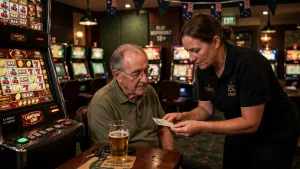
A useful comparison of physical pokies venues includes more than the machines on the floor. You can also ask what processes a venue must follow when gambling-related harm becomes apparent, and whether staff are available to respond. Those details say more about operational safeguards than a venue’s size or appearance.
A report published by regionriverina.com.au describes a requirement for venues with more than 20 gaming machines to have a dedicated responsible gambling officer (RGO) on duty while those machines are operating, with the rule taking effect from 1 July. The report also describes a one-month grace period for venues to introduce the officers and remove relevant signage. Treat this as a reported requirement, not as proof that a particular South Australian venue has met it. If this point affects your choice, ask the venue what arrangements apply there.
RGO Requirements
Venues with more than 20 gaming machines are required to have a dedicated responsible gambling officer on duty while those machines are operating.
The same report says venues will be required to maintain a gambling incident register. The register records occurrences that may indicate a patron is at risk of gambling harm or is already affected by it. In practical terms, this makes the venue’s response to concerning behaviour a comparison point: does it have a clear process for staff to recognise an issue and record what happened? A register is an operational record, not evidence that harm cannot occur.
When weighing South Australia pokies venues, distinguish a documented procedure from a broad assurance. You could ask who is responsible for responding to a concern, how staff record an incident, and what support is available if a patron appears distressed. The answers should describe a process, rather than rely on phrases such as “we take safety seriously.” That is a better basis for comparison than assuming every venue handles a difficult situation in the same way.
A venue’s policies and the way staff explain them can help you assess whether its safeguards are understandable and accessible. They do not establish which venue is the best pokies venue in South Australia for every player. “Best” depends on the criterion: if you value visible procedures and clear staff responsibilities, those are the points to compare. A register alone cannot tell you how consistently a process is followed, so consider whether the venue can explain how concerns are handled.
The same approach applies when comparing venues in or around a CBD. Focus on what can be checked directly: whether the venue can explain its incident-recording process and who patrons can approach with a concern. Do not treat a general statement about responsible gambling as a substitute for those details. Reporting rules are one part of the picture, not a scorecard for every aspect of a venue.
Keep the distinction clear: a reported rule sets out a responsibility, while a conversation with staff may clarify how a venue puts its procedures into practice. Neither tells you what will happen on a particular visit. Clear process. Not a promise.
A claim that a venue has late-running or round-the-clock pokies is separate from the question of who is responsible for gambling support while its machines are in use. The reporting by regionriverina.com.au says that, from 1 July, a venue with more than 20 gaming machines is required to have a dedicated responsible gambling officer (RGO) present whenever those machines are operating.
That condition links the officer’s duty to machine operation, not to a published venue timetable. It does not establish when a particular venue opens, when its pokies are switched on, or whether they run continuously. Nor does it confirm that any South Australian venue meets the machine-count threshold. A search result describing 24-hour pokies is not evidence of either continuous machine operation or continuous RGO coverage.
Record the venue’s stated opening hours only when you can verify them directly, and treat machine operating times as a distinct detail. Note the RGO requirement as a reported operational safeguard for venues above the threshold; do not use it to fill gaps in a venue’s schedule. Hours and staffing are different measures.
If you are checking whether a venue’s machines are operating at a particular time, seek current information from the venue rather than inferring it from the RGO rule. The rule describes the staffing condition during machine operation. It says nothing about whether machines are available every hour the premises are open, or whether a venue provides any service through the night. Those details need separate confirmation.
The distinction matters when weighing a claim about South Australia pokies opening hours. A venue might have premises hours that differ from machine hours, and a staffing requirement does not resolve either timetable. The practical value of the reported rule is narrower: at venues with more than 20 machines, an RGO is to be on duty while those machines operate. It is not a promise about access, a guarantee of a particular level of assistance, or proof that a venue is open now.
Use the threshold as a point to verify, not as a shortcut to a conclusion. If a venue publishes machine times, compare those with its premises hours; if it does not, ask directly. For searches about 24-hour pokies venues in South Australia, the responsible-gambling coverage requirement cannot turn an unverified hours claim into a confirmed one. Staffing follows operation. It does not set the clock.
A Crown-related result is not, by itself, proof that a Crown venue operates in South Australia. A brand name in a heading, map snippet or directory entry can refer to information about another place, an old listing or a page discussing the brand generally. Treat the name as a starting point, not as confirmation of a local pokies room.
For a South Australian venue comparison, first establish that the specific venue is in the state and that the information refers to that venue. Look for a clearly identified address and details published by the venue itself. If a listing does not make the location clear, do not use it to draw conclusions about local machine choices, facilities or operating arrangements.
The same distinction matters when you are looking for the best pokies room. “Best” needs a criterion: you might mean the room’s facilities, accessibility or the clarity of information about its machines. A Crown label alone cannot settle any of those comparisons. Without a confirmed South Australian venue to assess, ranking it against local rooms would give a false sense of precision.
Before relying on a result, ask what it actually establishes:
These checks help separate a venue fact from a brand association. A search result can be relevant to Crown without describing a South Australian place.
Claims about a maximum cash payout need the same discipline. Do not assume that one figure applies across a brand, a state or every pokie. A payout statement is useful only when it clearly identifies the particular machine or arrangement it concerns and the conditions attached to it. If those details are not clear, the figure cannot support a reliable comparison.
That is especially important when comparing a room with another venue: a headline amount without its scope can sound decisive while telling you little about the actual machines available. Ask the venue for the relevant machine-specific information before treating a payout claim as applicable.
Crown-related searches can point you toward a topic, but they do not establish a South Australian venue or make a local comparison possible on their own. Keep the standard simple: confirm the place, then assess details tied to that place. Anything less is branding, not a comparison.
A club in a central business district is a venue category, not proof that pokies are available there. If you are comparing South Australian clubs, establish what each venue actually offers before treating it as an option. A name, address or general description cannot tell you whether gaming facilities are present.
For any club you are considering, look beyond a broad claim that it takes responsible gambling seriously. The practical question is what happens when staff see conduct suggesting a patron may be at risk of gambling harm. A report by regionriverina.com.au describes a requirement for venues to keep a gambling incident register, recording occurrences that include this kind of behaviour.
That record matters because it creates a way to document incidents rather than leaving them as unrecorded observations. It is not, by itself, evidence that harm has been prevented, nor does it tell you how a particular club responds. A register is a record, not a guarantee.
You can ask a club whether it has pokies and, if so, what information it can provide about its responsible-gambling procedures. Keep the questions concrete:
These are questions to put to the venue, not claims that every club follows the same process. Clear, direct answers give you more useful information than a general assurance. If the venue cannot explain how concerns are handled, that uncertainty is relevant to your comparison.
When people look for the best pokies in a South Australian CBD, the word “best” can hide several different decisions. One person may care about whether a club has the facilities they want; another may place greater weight on how the venue explains its response to gambling harm. The incident-register requirement gives you one specific point to ask about, but it does not rank clubs or establish that any particular club has gaming machines.
Use the venue’s own information to confirm its facilities and procedures, and treat broad promotional wording as a starting point rather than evidence. The useful comparison is not which club sounds most reassuring. It is which one gives you clear, relevant answers about what it offers and how concerns are handled.
Cashless play and PayID describe different things. PayID is an alias layer on Australia’s New Payments Platform (NPP): it lets someone address a bank transfer using an email address, mobile number or Australian Business Number (ABN). The NPP is supported by all major banks and protects transfers with end-to-end encryption.
That tells you about the transfer system, not how a pokie accepts payment. A PayID reference does not establish that a venue’s machines are cashless, that they accept PayID, or that cashless play is available at all. To assess a particular venue, look for information specifically about its machine payment arrangements rather than treating a payment-system name as proof.
Keep the location question separate, too. A phrase combining “Newcastle” with South Australia does not, by itself, identify a venue or show where its machines are. Before relying on a listing, confirm the venue’s full location and whether its own information actually describes pokies there. A place name and a machine feature are separate claims; neither verifies the other.
This distinction matters because a payment method can operate across many settings, while a venue’s equipment and location are specific. PayID’s connection to the NPP can explain how bank transfers are addressed, but it cannot tell you whether a particular pokie is cashless or where you can find it.
Treat each detail as its own check: venue location, machine availability and payment options. Don’t infer one from another.
If you play pokies in South Australia, set your boundaries before you begin. Deposit limits cap what you can put in; loss limits set a ceiling on what you are prepared to lose; and session time limits help you decide when to stop. Self-exclusion is a separate option: it lets you bar yourself from gambling at the venues or services covered by the arrangement.
These tools do different jobs. A deposit limit controls funds added, not the result of a spin. A loss limit is a spending boundary, not a prediction of how long your money will last. A time limit manages duration rather than expenditure. Self-exclusion is the strongest step if you want to prevent access, but check which venues or services it covers and how to activate it.
None changes the odds or improves the chance of a return. A pokie spin remains an independent random event. Treat limits as safeguards for your decisions, not as a strategy for winning.
Write down a spending and time boundary before play, then avoid raising it in the moment. If you reach either limit, stop rather than treating it as a target to extend. If gambling is causing harm, self-exclusion may be more suitable than relying on a limit alone.
BetStop is a separate national self-exclusion scheme for Australian-licensed wagering operators. It does not bind offshore gambling sites, so do not assume it blocks access to every service. For South Australian venue play, check the applicable venue exclusion process directly; the name of a tool matters less than knowing where it applies.
The practical comparison is straightforward: choose a deposit limit for money added, a loss limit for losses, a time limit for session length, or self-exclusion when you need a barrier to access. No tool makes play risk-free.
Yes, Australians can play on offshore sites that accept them, but offering real-money online pokies to Australians without a domestic licence is illegal—and no such licences have been issued. You have no legal recourse in Australia if an offshore casino refuses to pay your winnings.
You must be at least 18 years old to gamble online in Australia.
E-wallets such as Skrill and Neteller are popular for their speed. Check the casino’s withdrawal options and terms before choosing a method.
Yes. Some providers let casinos choose from multiple RTP settings for the same pokie, so the same title may have different settings at different venues. Check the setting for the specific game version you plan to play.