Venue hours, gaming-area availability and online-play boundaries each require separate checks and should not be inferred from a search listing.
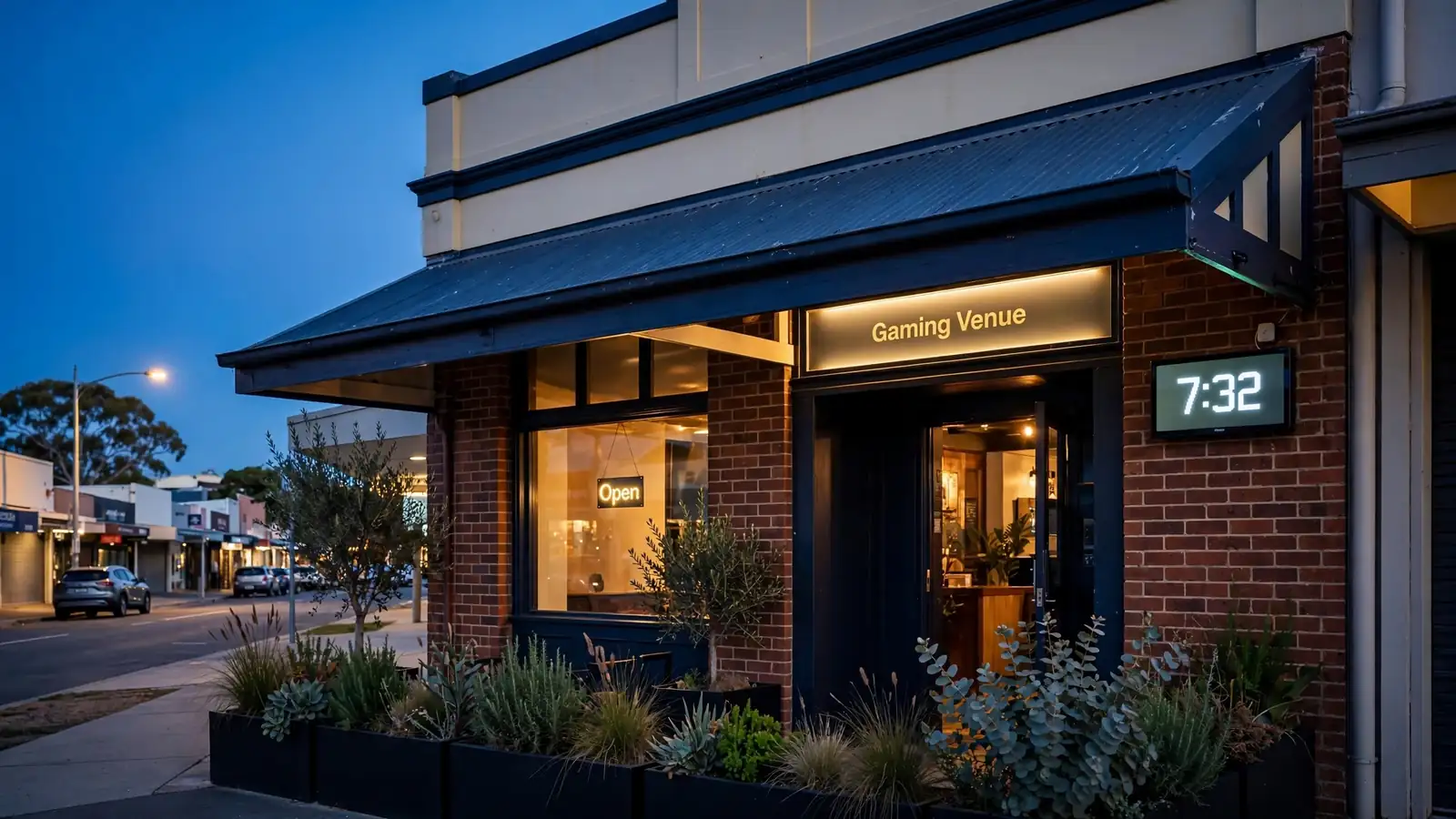
If you are deciding whether to visit a gaming venue in Adelaide, treat its opening hours as something to confirm, not assume. A search result, map listing or old directory entry may not reflect the hours in force when you plan to go. Check information issued by the venue itself before setting out, particularly if you are planning an early-morning or late-night visit.
Start with the venue’s own website or another official channel it maintains. Look for a current hours page, a dated notice or an update that clearly applies to the day you intend to visit. Make sure you are reading the venue’s information rather than a listing copied onto a third-party directory. If the details are unclear, call the venue and ask directly. A quick confirmation is more useful than relying on a snippet that may have been saved months ago.
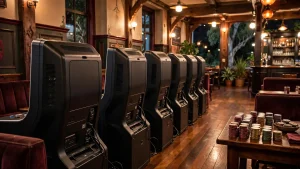
Be precise about what you need to know. A venue’s general trading hours do not necessarily tell you whether its gaming area is available throughout that period. Ask whether the pokies are operating at the time you plan to arrive, and whether any part of the venue has different hours. If staff give you a specific answer, note when you received it: schedules can change, and a past confirmation is not a standing promise.
 Pokies in Brisbane: Venue Hours and What to CheckLearn why venue opening times may not confirm pokies access, and how to check gaming-room hours directly before planning a visit.
 Best Pokies in New South Wales: A Practical GuideThis guide focuses on verifying venues, hours and machine mechanics—not ranking a single “best” option—and explains the 18+ rule and pre-commitment limits.
Opening information may be presented as a regular weekly schedule, while a particular date can have different arrangements. Before travelling, check the entry for the day you have in mind, including any notice about a temporary change. If you are aiming to visit very early or close to a listed closing time, confirm that the gaming area—not just another part of the venue—will be operating then.
Do not read “open now” as a guarantee. That label can depend on when a listing was updated, how it defines the venue’s hours and whether it distinguishes the gaming area from the rest of the premises. It can help you identify a place to check, but it is not the same as a direct confirmation from the venue.
The same caution applies to searches for pokies open early or late in Adelaide. A result that appears to match a particular time does not establish that the information is current or that gaming is available for the full period shown. Confirm the date and the relevant area with the venue. If you cannot verify either, plan around a time the venue has confirmed rather than treating an uncertain listing as reliable.
Before leaving, use this short check:
If you receive different answers from different sources, give more weight to a direct, recent response from the venue than to an undated directory listing. You can also ask whether the hours are expected to apply at your intended arrival time. That does not make the schedule unchangeable, but it clarifies what the venue is currently advising.
Keep the check proportionate. You do not need to collect several old listings and guess which one is right. One current official source, with a direct call if anything remains uncertain, is a clearer basis for deciding when to travel. For an especially early or late visit, that call is worth making.
Opening hours answer a practical question: whether you can visit at a particular time. They do not, by themselves, tell you anything about the performance of a pokie or the chance of a particular outcome. Avoid treating a venue’s hours, popularity or a search listing as evidence about payout percentages. Those are separate matters and need different information.
If you are comparing possible visit times, the useful criterion is certainty: a time confirmed directly by the venue is a stronger basis for planning than a time inferred from a third-party listing. There is no reliable shortcut in wording such as “open now” when the underlying schedule has not been checked.
You must also be at least 18 years old to gamble in Australia. That applies whether you are considering pokies at a venue or another form of gambling. If you are under 18, do not plan a gambling visit.
For anyone old enough to attend, the practical rule is straightforward: verify the hours close to the time you intend to go, and confirm that the pokies will be operating during that window. Adelaide pokies may be listed as open at a particular hour, but a current venue confirmation is what turns a listing into a useful plan. A little checking beats a wasted trip.
If you're looking for pokies options to consider in Adelaide in 2026, this list gives you a concise reference point. Check the details that matter to you, such as licensing information, deposit minimums and stated payout speeds.
Playfina Casino
Playfina Casino is listed with a Curacao eGaming licence held by Hollycorn N.V. since 2017. You can expect the minimum deposit to depend on the offer, with the stated range at A$20–30.
House of Pokies
House of Pokies lists an international iGaming licence, though the source does not name the jurisdiction. You can use PayID for payouts stated at 1–24 hours; the minimum deposit is A$30, or A$10 via PayID.
Wild Tokyo
Wild Tokyo is listed with a Curacao licence and a A$10 minimum deposit. Its stated payout times are 30–60 minutes for crypto and 1–5 days for fiat.
DragonSlots Casino
DragonSlots Casino is listed with a Curacao Gaming Authority licence held by Jumpman Gaming Ltd. That licensing information is the main supplied point to consider.
Kingmaker
Kingmaker lists a A$30 minimum deposit. Its stated payout times are about 90 minutes for crypto and 1–5 days for fiat.
7Bit Casino
7Bit Casino is listed as operating under a Curacao licence, with Dama N.V. named as its operator. You can use that licensing detail as a reference when considering it.
MrPacho
MrPacho lists a A$30 minimum deposit. Its stated payout times are 30–120 minutes for crypto and 24–72 hours for fiat.
Vegaz Casino
Vegaz Casino is listed with Curacao licence OGL/2024/1335/0780. Its stated minimum deposit is EUR 20.
LevelUp Casino
LevelUp Casino is listed with Curacao eGaming licence OGL/2023/174/0082, with Dama N.V. named as the operator. The stated minimum deposit is A$15.
Rollero Casino
Rollero Casino is listed with Curacao Gaming Control Board licence OGL/2023/176/0095, held by Hollycorn N.V. That licensing information is the main supplied point to consider.
“Best” only means something once you name the measure. If you are comparing pokies associated with Adelaide, a useful measurable criterion is the game’s configured return-to-player percentage, or RTP. It can help distinguish one configuration from another, but it is not a forecast of what you will collect from a particular machine or session.
A specialist review reports that some game providers let casinos choose between multiple RTP settings for the same pokie. As a result, the title alone may not tell you which return setting applies: the same game can have different configured percentages at different casinos. If RTP is your comparison criterion, look for information that identifies the setting for the specific game and venue, rather than relying on a general description of the game.
That distinction matters when trying to identify the best-paying pokies in Adelaide. A game’s name, theme or popularity does not establish its RTP. Nor does a percentage quoted for one casino establish the setting used elsewhere. A meaningful comparison needs the same kind of information for each option: the stated RTP, the game it refers to and the casino where that configuration applies. Without those details, a ranking based on return would have no sound basis.
RTP describes a game’s configured return as a percentage. It is a way to compare settings, not a promise that an individual player will receive that proportion back. Even if two casinos offer the same pokie, their settings may differ; even if their settings match, that does not make the results of a particular session predictable.
Use RTP as a comparison measure, not as a guarantee. If you cannot establish which setting applies, you cannot reliably use a number from elsewhere to compare that game with another option. A clear figure is useful only when it belongs to the exact configuration being considered.
It is also worth keeping the comparison narrow. A higher stated RTP may make one configuration better on that measure, but it does not show that the game will pay you more during a short visit. It cannot identify a winning machine, predict when a payout will occur or turn a past result into a guide to the next spin. Those are different claims, and RTP does not support them.
Return-to-player (RTP) percentages describe a game's configured return as a percentage, but they are not a forecast of individual session outcomes or a guarantee of a specific payout.
Each pokie spin is an independent random event determined by a Random Number Generator. The outcome of one spin does not determine the next one. A run of wins does not establish that another is due, and a run of losses does not make a payout more likely on the next press.
This independence is central to any honest comparison. RTP concerns the game’s configured return, while an individual spin remains random. A machine that has just paid out is not therefore “cold” or “ready”; the visible sequence does not provide a reliable forecast. Past results are not a shortcut to finding the best pokies in the Adelaide CBD or elsewhere in the city.
If you are assessing a particular game, separate what can be measured from what cannot be inferred:
The first two points can support a comparison when the relevant information is available. The third prevents that comparison from being mistaken for a prediction. A higher configured RTP is a better result only under the RTP criterion; it does not make a game the best choice by every measure, and it does not promise a better personal outcome.
So “best” depends on what you mean. If you mean the higher configured RTP, compare the applicable settings for the same game across casinos. If you mean the game most likely to win on your next spin, RTP cannot answer that. A ranking needs a defined measure and comparable information; without both, “best paying” is a label, not evidence.
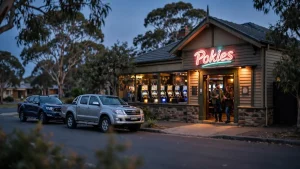
If you are looking for a pokie venue near Adelaide Airport, the CBD or North Adelaide, start by confirming the venue itself—not just a result that describes somewhere as “nearby”. A clear venue name and street address give you something concrete to check before planning a trip. Do not treat a map label, directory entry or search snippet as confirmation that a particular venue has the machines you are looking for.
The useful comparison is the route from your actual starting point. “Near the airport” can mean different things depending on where you begin and how you plan to travel. Likewise, a CBD result may be convenient from one part of the city and less practical from another. Check the venue’s address against a current map, then review the route for your intended mode of transport. The distance alone is not the whole calculation.
Before leaving, make sure the address belongs to the venue rather than a nearby business, a similarly named place or an outdated listing. Use the venue’s own current information to confirm its identity and location; if the address is unclear, contact the venue directly. Then compare the route from the airport, your accommodation or the part of the CBD where you will be. A result that looks close on a map is not a substitute for checking the actual journey.
A simple checklist helps keep the decision practical:
That process also helps when you are comparing places described as being in North Adelaide or near the airport. Treat those descriptions as starting points for checking, not proof of proximity. If a listing gives no precise address, you cannot reliably compare how far away it is or whether the route suits your plans. Guessing is not navigation.
For a venue near Adelaide Airport, use the airport as your starting point only if that is where your journey begins. For a CBD visit, use your actual destination or accommodation. This avoids choosing a place based on a broad area label that may not match your route. Keep the question narrow: can you verify the venue’s address, and can you check a route from where you will be?
If you are under 18, gambling is not legally available to you in Australia. For adults, careful location checking is a straightforward way to avoid a wasted trip; it does not establish what games a venue offers. Address first. Route second.
When comparing Adelaide venues, operational safeguards are a more concrete measure than a broad label such as “best”. They can tell you something about how a venue is expected to respond when gambling may be causing harm. They do not show which venue has the best pokies, or how any individual machine performs.
A report by regionriverina.com.au describes a requirement applying to venues with more than 20 gaming machines: a dedicated responsible gambling officer (RGO) must be on duty while those machines are operating. The report says the change takes effect from 1 July. It also describes a one-month grace period for venues to remove signage and introduce the officer role. These details concern venue operations; they are not evidence that a particular Adelaide venue meets every requirement today.
The distinction matters if you are comparing venues. A stated staff role is a safeguard, not a measure of machine quality or a promise of a particular result. Nor does the threshold tell you how many machines an Adelaide venue has. To assess a specific place, look for current information from the venue or the relevant regulator rather than inferring its status from general reporting.
The same report says venues will also be required to maintain a gambling incident register. It is intended to record occurrences, including cases where a patron’s behaviour suggests they may be at risk of gambling harm or already affected by it. In practical terms, the register is a record of concerns arising at the venue, not a public scorecard ranking venues by safety.
That is useful context when considering pokies venues in Adelaide or the CBD: safeguards describe how a venue is meant to handle incidents, while machine-by-machine return information is a separate matter. The existence of a register does not tell you how often incidents occur, what action followed in an individual case, or whether one venue is safer than another. Those conclusions would require information the register requirement alone does not provide.
For a reader choosing where to play, the measurable question is therefore limited: is the venue subject to the stated threshold, and are the relevant safeguards in place? The threshold is more than 20 machines; the officer is to be present while machines are operating. The register concerns incidents, including signs of gambling harm. Those are specific operational criteria, but they do not establish a “best pokies venue in Adelaide”.
If you want to check a particular venue, ask it how patrons can speak with the RGO and how staff respond to concerns. Treat an answer as information about its stated process, not proof of machine performance. A venue’s safeguards may matter to your decision, but they cannot replace your own limits or determine which pokies will produce a particular outcome. Each spin is random and independent.
 Pokies in Canberra: How to Check Venues and HoursLearn how to verify gaming-room hours, distinguish venue listings from room access, and assess location and online-pokies claims.
 Big Red Pokies Online in Australia: Free Play GuideLearn what can be verified about free play, Australian availability and game access, and why labels alone do not confirm the terms.
A useful comparison stays within what the evidence can support: record the safeguards a venue confirms, and keep them separate from claims about games or outcomes. Good administration is not a payout feature.
A search for online pokies in Adelaide may lead to offers framed around real-money play or a no-deposit bonus. Those labels do not change the legal position in Australia, and they are not evidence that a service is locally licensed or protected.
The Interactive Gambling Act 2001 prohibits operators from providing real-money online casino games to people in Australia unless they hold a domestic licence. No Australian online casino licences have been issued, so there is no locally licensed online casino for you to use. The restriction is directed at the companies providing the service, rather than at individual players.
That distinction matters. Offshore operators may still accept Australian customers, but their willingness to take a deposit does not make them Australian-licensed or establish that you have domestic consumer protection. Acceptance is not approval. A bonus offer does not alter that boundary either.
A payment option is not a licence check. Even if a site lets you register or transfer money, that alone says nothing about whether the operator is authorised in Australia, whether an offer is fair, or whether you can enforce a claim locally. Treating a successful transaction as proof of legitimacy would confuse access with oversight.
Legal Risk
No Australian online casino licences have been issued; using offshore operators means you lack domestic consumer protections and legal recourse in Australia.
This is especially relevant when an offer is advertised as free play or a no-deposit bonus. The wording may suggest that the legal or financial risk is lower, but it does not change who is providing the service or the fact that there is no Australian-licensed online casino. A promotional label is not a substitute for a domestic licence.
For the same reason, searches for the best pokies in Adelaide should not be read as a recommendation to deposit with an online casino. The phrase can describe different things, but real-money online casino play sits within a prohibited operator market in Australia. There is no domestic licence to check against an online casino claiming local status.
BetStop applies to Australian-licensed operators; it does not bind offshore sites. Since there are no Australian-licensed online casinos, registering with BetStop should not be treated as a way to block access to offshore casino services or control activity with them.
The practical comparison is therefore not between competing local online casinos. There are none. It is between a domestic licensing system that has issued no online casino licences and offshore services that may accept Australians without that local authorisation. A deposit can begin a transaction; it cannot create Australian oversight or guarantee a remedy if a dispute arises.
If your interest is in pokies at a physical Adelaide venue, that is a separate question from making a real-money online casino deposit. Keep the two settings distinct: an online offer does not acquire local standing simply because it is visible to someone in Adelaide.
An online casino does not become a local Adelaide venue because its website is accessible from the city. For real-money play, the relevant distinction is where the customer is located and whether the operator is permitted to provide the service in Australia—not whether the website uses Adelaide in its wording or appears to serve nearby players.
Under the Interactive Gambling Act 2001, companies cannot offer real-money online pokies to people in Australia without a domestic licence. No such licences have been issued, so there is no Australian-licensed online casino. A website presenting itself as an Adelaide casino online is not evidence that it holds local approval.
That matters when you compare a physical gaming venue with a website. A search for online pokies near Adelaide may return offshore services, but proximity in a search result does not make an offshore operator an Australian-licensed provider. Nor does a site’s own claim of legality establish that it is authorised to offer real-money casino games to Australian residents.
The law’s restriction is directed at companies offering the service. The practical risk for a player is different: if an offshore casino withholds winnings, Australian players have no legal recourse in Australia to compel payment. That leaves you without the domestic route you might expect when a locally regulated business fails to meet its obligations.
Attention If an offshore casino withholds winnings, you have no legal recourse within Australia to compel payment.
This is not a small technical distinction. A website may accept customers, display game details and state its own terms, yet those features do not create an Australian licensing framework or a local process for recovering unpaid winnings. If a dispute arises, the operator’s location and the limits on Australian recourse matter more than its marketing language.
The same caution applies to searches for the best-paying pokies in Adelaide or high-limit and maximum-bet games online. Those descriptions do not answer the legal question. They can make an offer sound tailored to local players, but they do not establish that the provider is licensed in Australia or that you could enforce a claim here.
Treat “online” and “near Adelaide” as separate ideas. A land-based venue’s location is a physical matter; an online casino’s legal status turns on the service and the Australian customer it targets. A site’s availability to you is not proof that it may lawfully provide real-money online pokies to people in Australia.
If your priority is consumer protection, the absence of an Australian-licensed online casino is decisive: there is no domestic online casino licence to check, and an offshore operator that refuses to pay leaves you without Australian legal recourse. Read claims about local service accordingly. Convenient wording is not legal protection.
A listing that describes a venue as open around the clock is not enough to establish that its pokies are available at every hour. Opening information can be brief, outdated or unclear about which part of a venue it describes. Before making a late-night trip, check the venue’s own current information and confirm that it applies to the gaming area, not merely another service or part of the premises.
For a reliable check, look for hours published by the venue itself, then contact it directly if the details do not answer your question. Ask whether the gaming area is open at the time you plan to arrive, and whether the stated hours apply on that particular day. If you are already on your way, confirm again before travelling; an old result or a general listing may not reflect a recent change.
Be precise about the time you need. “Open now” can become stale within minutes, while a venue’s general opening hours may not explain whether pokies are available throughout that period. Check the date as well as the time, especially when your plans fall outside an ordinary weekday. A clear answer about the gaming area is more useful than a broad claim that a venue is open.
Availability is only one part of the decision. Before you go, set a deposit limit and a loss limit that you can afford, and decide how long you intend to stay. Session time limits can help you keep to that plan. These are practical controls, not a promise that a session will go as expected.
If you want to stop gambling, self-exclusion is another responsible-gambling tool. Consider it before setting out if you have already decided that gambling is not right for you. Do not treat a venue’s long hours as a reason to extend a session or return after reaching a limit. Open doors do not improve the odds.
Planning a Session
Verify Availability
Confirm current hours and gaming area access directly with the venue.
Set Financial Limits
Establish a deposit limit and a loss limit that you can afford.
Define Timeframes
Decide on a specific session time limit to maintain control.
Evaluate Tools
Consider self-exclusion if gambling is no longer right for you.
A useful check is simple: confirm the current hours directly, establish that they cover the gaming area and your intended arrival time, then decide whether the planned session fits your limits. If you cannot get a clear answer about availability, do not rely on a snippet to settle it. Recheck later or choose not to travel until the venue confirms.
The phrase “24-hour pokies” sounds definitive. It is not a substitute for a current, venue-specific confirmation. Plan around information you can verify and controls you can keep.
A Crown-related name does not, by itself, confirm that a Crown casino or a particular pokies room operates in Adelaide. Before treating a venue name as a real destination, check that the operator identifies the property on its own current venue information. A label on a map, a directory entry or a discussion thread is not the same thing as confirmation from the venue.
That distinction matters when you are comparing a room, looking for a particular pokie, or asking about a maximum cash payout. A venue name cannot tell you which machines are available, what rules apply to them or what their payout arrangements are. Those details need to be tied to the specific venue and machine, not inferred from the word “Crown”.
A specialist review reports that some game providers allow casinos to choose between different RTP settings for the same pokie. As a result, one game can have different configured return percentages at different casinos. The game’s name alone is not enough to establish its setting at a particular venue.
RTP is also not a promise about what you will receive from a session. Each spin is random and independent, so a return percentage describes neither the outcome of an individual spin nor a guaranteed payout to you. It cannot establish that a named Adelaide room has a particular game, setting or result.
For a comparison to be useful, the information needs to match the place and pokie you are actually considering. If a listing gives a game name but no venue-specific RTP information, it does not settle the comparison. If you are checking a maximum cash payout, look for the relevant machine’s own payout information and terms; an RTP figure answers a different question.
A sensible comparison therefore separates three things: whether the venue is confirmed by its operator, whether the specific pokie is identified, and whether the information provided actually covers the feature you want to compare. Do not treat one as proof of the others. A shared name is not a machine specification.
The “best” room depends on your criterion. If your priority is a particular game, confirmation of its presence matters. If you are comparing return settings, you need information tied to that game at that casino. If your concern is the maximum cash payout, RTP alone will not answer it. Without the relevant detail, there is no sound basis for naming a winner. A confident label is not evidence.
When comparing clubs or other venues for a visit in Adelaide’s CBD, responsible-gambling safeguards are a practical criterion. They do not identify which venue has the best pokies, but they indicate what support and procedures are expected when gambling harm may be a concern.
A report published by regionriverina.com.au describes a requirement taking effect from 1 July: a venue operating more than 20 gaming machines must have a dedicated responsible gambling officer (RGO) on duty during those operating hours. The threshold matters. The requirement described in the report applies to venues above it, not automatically to every club with gaming machines.
For you, an RGO is a named point of contact for responsible-gambling concerns while the machines are running. If this safeguard affects your choice, ask the venue how to contact the officer during your visit. A general statement about responsible gambling is not the same as knowing who is on duty.
The same report says venues will also have to maintain a gambling incident register. It is intended to record occurrences such as a patron displaying behaviour that suggests they may be at risk of, or affected by, gambling harm. This is a venue record, not a measure of a pokie’s performance, and it does not tell you which machine offers a better return.
These safeguards answer different questions. The officer requirement concerns who is available while machines operate; the register concerns how certain incidents are documented. Neither is a ranking tool. If you are comparing CBD clubs, treat the presence of clear responsible-gambling procedures as one criterion, separate from the games themselves.
Self-exclusion is another responsible-gambling tool. If you are considering it, ask the relevant venue what process applies and what it covers before relying on it. Do not assume that a process at one venue automatically applies elsewhere.
The useful comparison is therefore concrete: can you identify the responsible gambling officer when the threshold applies, and can the venue explain its incident-register procedure and self-exclusion process? Those answers help assess safeguards, not the chance of a particular spin.
The phrase “cashless pokies” can refer to two different things: how a gaming machine accepts or records play, and how money is transferred to an online service. PayID belongs to the second category. It is an alias service within Australia’s New Payments Platform (NPP), allowing a bank transfer to be addressed using an email address, mobile number or ABN. That function does not, by itself, make a pokie cashless.
This distinction matters when comparing Adelaide venues with Newcastle. A mention of PayID tells you about a possible transfer method, not whether a particular venue’s machines support cashless play. It does not establish that a venue offers that feature, and it cannot identify which pokies are available there. Those are separate questions requiring current, venue-specific information.
PayID also does not certify an online casino. Its presence cannot show that an operator is licensed in Australia, that a game is fair, or that the operator publishes a pokie’s configured return-to-player setting. Payment convenience and gaming transparency are different criteria; treating one as proof of the other is a category error.
For a practical comparison, keep the criteria in separate columns: venue machine functionality, payment method, and information about game settings. Record only what the venue or service clearly confirms. If you are checking a physical pokie, ask the venue about its machine and payment arrangements. If you encounter PayID in connection with an online casino, read it only as a transfer option—not as evidence of regulatory approval or game quality.
A bank-transfer alias is not a machine feature. Nor is it a quality mark.
Yes, Australian players can legally play on offshore sites that accept them, but companies cannot legally offer real-money online pokies to Australians without a domestic licence, and none have been issued. If an offshore casino withholds your winnings, you have no legal recourse in Australia.
You must be at least 18 years old to gamble online in Australia.
Yes, PayID is treated like any other qualifying deposit method. Whether a particular deposit qualifies depends on the bonus terms.
It is the amount you must bet, usually expressed as a multiplier, before bonus winnings can be withdrawn. For example, a 40x requirement on a $500 bonus means you must place $20,000 in bets.