A comparison of payment roles, cashout constraints and the legal limits applying to real-money casino games in Australia.
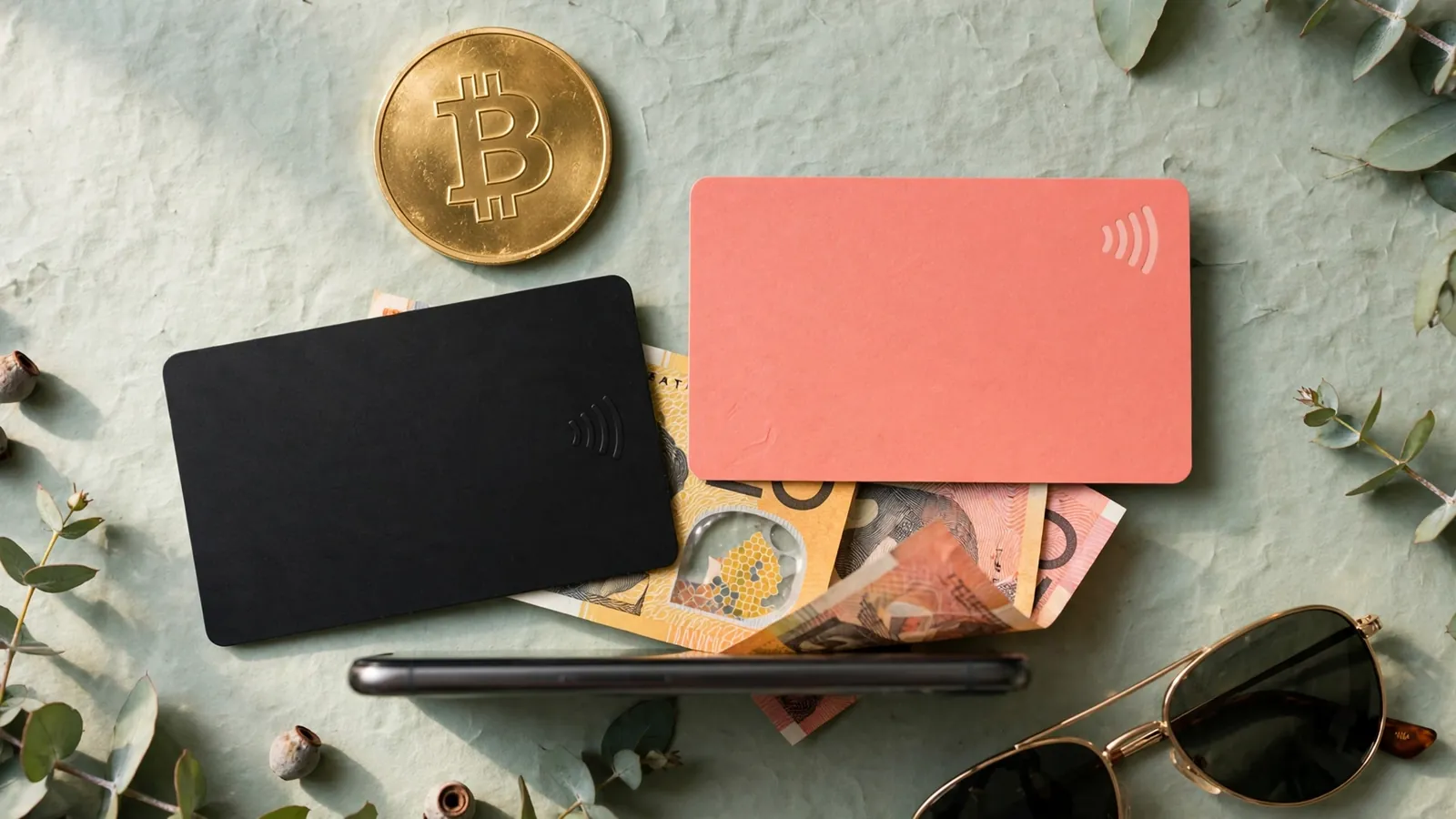
For Australian readers, there is an important limit before any comparison: providing real-money online casino games to people in Australia is illegal under the Interactive Gambling Act 2001. That includes pokies and table games. The categories below are therefore a way to understand how payment routes differ, not an endorsement or invitation to fund an offshore gambling account.
A specialist review groups cryptocurrencies, e-wallets, prepaid cards and bank transfers among payment categories discussed for Australian players. That description does not establish that a route is available, lawful for an operator to offer, or suitable for a particular transaction. A payment logo is not a verdict. The useful question is what role a method serves, and what constraints come with that role.
| Payment category | What it can do | Main distinction |
|---|---|---|
| E-wallet | Hold funds and act as an intermediary between a bank or card and a merchant | Adds a separate wallet account to the payment path |
| Prepaid voucher | Make a payment from value loaded in advance | Spending is limited to the loaded amount |
| Bank transfer | Move money between bank accounts | Relies on a banking route rather than a separate wallet |
| Cryptocurrency | Transfer digital assets through a blockchain network | Transfers are irreversible and have no chargeback option |
When choosing an online casino payment method in Australia, you’ll want to check the details that matter to you, such as deposit minimums and stated payout times. These verdicts highlight the payment-related information available for each operator.
Playfina Casino
Playfina Casino lists a minimum deposit of A$20–30, depending on the offer. Its stated licence is Curacao eGaming, held by Hollycorn N.V. since 2017.
House of Pokies
House of Pokies lists PayID payouts of 1–24 hours and a A$30 minimum deposit, reduced to A$10 for PayID. Its source describes its licence as international but does not name the jurisdiction.
Wild Tokyo
Wild Tokyo lists a A$10 minimum deposit. Its stated payout times are 30–60 minutes for crypto and 1–5 days for fiat.
DragonSlots Casino
DragonSlots Casino is listed with a Curacao Gaming Authority licence held by Jumpman Gaming Ltd. No deposit minimum or payout timing is provided.
Kingmaker
Kingmaker lists a A$30 minimum deposit. Its stated payout times are about 90 minutes for crypto and 1–5 days for fiat.
7Bit Casino
7Bit Casino is listed as operating under a Curacao licence, with Dama N.V. as its operator. No deposit minimum or payout timing is provided.
MrPacho
MrPacho lists a A$30 minimum deposit. Its stated payout times are 30–120 minutes for crypto and 24–72 hours for fiat.
Vegaz Casino
Vegaz Casino lists a minimum deposit of EUR 20. Its stated licence is Curacao OGL/2024/1335/0780.
LevelUp Casino
LevelUp Casino lists a A$15 minimum deposit. Its stated licence is Curacao eGaming OGL/2023/174/0082, held by Dama N.V.
Rollero Casino
Rollero Casino is listed with a Curacao Gaming Control Board licence, OGL/2023/176/0095, held by Hollycorn N.V. No deposit minimum or payout timing is provided.
An e-wallet can be useful as a middle layer when you want to keep a merchant payment separate from a direct bank transaction. It is not simply another name for a bank account: you first need funds in the wallet, and the wallet provider may set its own rules. Its practical value depends on whether the relevant service supports the route and whether the transaction is permitted. Treat the wallet as a payment tool, not as a guarantee of privacy or acceptance.
A prepaid voucher is built around a different criterion: limiting the amount available to spend. Its ceiling is the value loaded onto it, which can help prevent a payment from drawing more than that stored value. That feature does not make it a general-purpose account. A voucher and a bank account solve different problems; one makes a pre-set balance available, while the other can send money from an account.
Bank transfers suit payments that move directly through banking infrastructure. Their role is straightforward, but “bank transfer” is a broad category rather than a promise about speed, availability or outcome. The route presented by a service matters, as do the rules of the banks involved. For Australian bank-payment details, the specific methods need to be considered separately; a category label alone tells you little.
Cryptocurrency is distinct because a blockchain transfer cannot simply be reversed through a card-style chargeback. If an address or network is wrong, the transaction may not be recoverable. That makes careful checking essential wherever cryptocurrency is used. It should not be treated as an acceptable deposit method for online gambling in Australia: the presence of a crypto option does not override the legal restriction on providing real-money casino services here.
Cards and phone-based payment screens can make a transaction look simple, but the interface does not determine whether the underlying payment is allowed or accepted. Credit cards and credit-related products must not be used to fund online wagering. Nor does tapping a phone turn a payment into a separate category with different protections; the underlying account, provider and transaction rules still matter.
So the category that looks “best” depends on the job: a wallet adds an intermediary, a voucher limits spending to its stored value, a bank transfer moves funds through banking channels, and cryptocurrency carries irreversible-transfer risk. None of those descriptions establishes a lawful route for real-money online casino play in Australia. The distinction is practical, not promotional.
Legal Restriction
Under the Interactive Gambling Act 2001, providing real-money online casino games to people in Australia is illegal.
A payment option shown beside a deposit field does not, by itself, tell you how money could be returned. Treat paying in and cashing out as separate questions. A specialist review notes that casino payment methods can differ between deposits and withdrawals; the practical point is to establish the withdrawal route before treating any deposit option as relevant.
That distinction matters because a payment page can make the first step look simple while leaving the return route unclear. A method may be presented for funding an account without being presented for withdrawals. Do not infer that the same option works in both directions, or that an available deposit route guarantees a usable cashout route.
For casino payment risk management, keep the two decisions in separate columns:
| Decision | What to establish |
|---|---|
| Paying in | Which methods are shown for deposits, and what terms apply to them? |
| Receiving money | Which methods are explicitly available for withdrawals, and what conditions apply? |
If the second column is unanswered, the first is not enough. The best online casino payment method cannot be identified by the deposit screen alone; the relevant criterion is whether the full payment path is clear. A method that appears suitable for adding funds may not solve the separate problem of receiving them.
Read the operator’s payment terms and withdrawal information as separate documents, even when they appear on the same page. Look for wording that expressly identifies a route for each direction. If the language only describes deposits, do not treat that as confirmation of withdrawal support. If the terms are unclear or inconsistent, do not rely on an assumption to fill the gap.
This is also why a familiar payment brand is not a complete answer. The name of a service does not establish that a particular operator accepts it for both transactions. Nor does a list labelled “payment methods” necessarily explain whether every listed option is for deposits, withdrawals, or both. The useful comparison is not simply which logos appear, but whether the stated route covers the transaction you need.
There is a more basic Australian issue before any payment decision. Under the Interactive Gambling Act 2001, operators are prohibited from providing real-money online casino games, including pokies and table games, to people physically located in Australia. Payment information does not change that legal position. A page describing an online casino payment or inviting Australians to use one should not be mistaken for confirmation that the service is lawful to provide here.
If you encounter such a payment page, use the distinction between deposits and withdrawals to assess what its claims actually say, not as encouragement to send money. A deposit route is only one part of the picture; unclear withdrawal terms leave you without a clear account of how funds would be returned. Even a stated route does not remove the legal concern or make the operator’s claims a guarantee.
No implied route. No guesswork.
PayID and BPAY are Australian bank-payment services, but their role in a casino payment depends on the operator and the transaction. A useful comparison is speed and setup: PayID connects an identifying detail to a bank account, while BPAY is a bill-payment route whose processing is not suited to immediate use.
There is an important legal limit. Under the Interactive Gambling Act 2001, operators cannot provide real-money online casino games, including pokies, poker and table games, to people physically located in Australia. The payment details below describe how the services work; they are not a recommendation to fund an online casino account.
Legal Notice
Operators cannot provide real-money online casino games, including pokies, poker and table games, to people physically located in Australia under the Interactive Gambling Act 2001.
PayID lets a person link a mobile number, email address or ABN to an Australian bank account through the New Payments Platform. You can then use the registered identifier rather than entering account details for each payment. PayID is supported by every major Australian bank, but that does not mean it is available for every type of payment or at every operator.
A specialist review reports that PayID deposit availability depends on the operator. The same review advises checking withdrawal support separately: a method shown for paying in should not be assumed to work for receiving money back. The distinction matters because a payment option can be visible at checkout without establishing how a later payment would be handled.
For a bank-linked route, the practical criteria are therefore separate: whether the relevant service is offered, which account details it requires, and whether it supports the transaction you have in mind. PayID’s connection to Australian bank accounts explains its local relevance; it does not settle operator-specific availability. Check the terms attached to the payment route rather than inferring them from the PayID name alone.
BPAY is another way to make a payment through a bank, but timing is the key difference. A specialist review describes BPAY processing as taking one to two business days. That makes it a poor fit when the purpose is real-time gameplay: the payment may not be available for immediate use.
The same specialist review describes BPAY as rarely used for real-time gameplay and as a possible backup when PayID is unavailable. Treat that as a description from a review, not as a guarantee that a particular operator accepts BPAY or that it will be offered for every transaction. Availability is a decision made by the service handling the payment.
The delay also changes what “available” means. A payment method can appear on a list, yet still fail to meet a need for immediate access. With BPAY, the stated processing window is measured in business days, so the relevant question is not simply whether the option exists but whether its timing fits the transaction.
| Criterion | PayID | BPAY |
|---|---|---|
| Connection | A mobile number, email address or ABN is linked to an Australian bank account through the New Payments Platform. | A bank-based bill-payment route. |
| Timing described in a specialist review | No processing time is established here. | One to two business days. |
| Availability | Deposit support depends on the operator; withdrawal support needs separate confirmation. | A specialist review describes it as a possible backup when PayID is unavailable. |
| Best comparison point | Bank-linked identification and operator-specific support. | Slower processing and limited suitability for real-time use. |
If you are comparing Australian bank-payment options, PayID’s distinguishing feature is the linked identifier; BPAY’s is the stated processing delay. Neither label by itself tells you whether a particular transaction is supported, and a deposit option should not be treated as evidence of a withdrawal route. Timing matters.
A payment gateway is the digital link that carries a payment request between a merchant’s checkout and the organisations that process and approve the transaction. It can pass the card details for authorisation and return a result, such as approval or decline. The gateway handles the request; it does not decide that every payment will be accepted.
That distinction matters with card payments. A specialist review describes Visa and Mastercard deposits as instant when approved. “Instant” refers to the processing of a successful transaction, not a promise that a card will work. A request can still be rejected before funds reach the merchant.
Attention: Many standard Visa and Mastercard transactions to offshore casinos are blocked by Australian financial institutions, regardless of the payment gateway used.
For Australians, the issuing financial institution is a key point in that chain. A specialist review reports that many standard Visa and Mastercard transactions to offshore casinos are blocked by Australian financial institutions. A payment may therefore fail even when the card details are correct and the checkout appears to support that card. The gateway can relay the decline, but it cannot override the institution’s decision.
There are two different failure points: the gateway may not be able to process the request, or the institution may refuse authorisation. From your side, both can look like a failed deposit. A rejection is not evidence that the gateway is broken, nor does a successful-looking checkout screen mean the transaction has been approved. Check the final status shown by your financial institution rather than assuming that a delay means the payment will eventually go through.
The term “casino payment gateway” can make the gateway sound like a payment method in its own right. It is not the same thing as Visa or Mastercard: the card is the means of payment, while the gateway is part of the processing route. The same distinction applies to an online casino payment gateway. A checkout can display a familiar card mark while the transaction still depends on the gateway’s processing and the institution’s authorisation.
In Australia, there is a more fundamental consideration than checkout technology: the Interactive Gambling Act 2001 makes it illegal for operators to provide real-money online casino games, including pokies and table games, to people physically located in the country. A payment screen does not change that legal position. Nor does a transaction being processed successfully establish that the service is lawful.
If a card transaction is declined, do not treat the gateway as a route around the decision. Repeated attempts may produce more declines without changing the underlying restriction. A payment interface can look polished. That proves little.
A payment described as “SMS-style” and one made by paying via a voucher are not automatically the same route. The label alone does not tell you where the money comes from or how it can be returned. Before relying on either description, identify the actual payment method and read what the transaction terms say about funding and cashouts.
For a phone-based option, check what action the name refers to. Is the phone involved in confirming a payment, or is the charge itself made through a mobile account? Those are different functions, even if both are presented as a simple phone payment. Do not assume that a text message, phone number or mobile screen means the method works like a prepaid voucher. The payment description should make clear what is being charged and what route the money takes.
A voucher has a more specific limit: it can be used only up to the value loaded onto it. That cap makes it easier to keep the amount spent within a chosen boundary. Once the loaded value is used, the voucher does not provide additional funds by itself. This can suit someone who wants a fixed spending limit, but it does not make the voucher a complete payment solution.
The cashout side is the important catch. Money deposited using a voucher generally cannot be sent back to that same voucher. You therefore need a separate method for receiving withdrawals, and you should confirm that route before paying in. Treat the deposit method and the cashout method as separate decisions, rather than assuming the first one will handle both.
That distinction also matters when an option is described as a casino SMS payment. The wording may sound like a self-contained system, but it does not establish whether it is a deposit route, a way to authorise a charge, or an option for receiving funds. Check the method’s stated function instead of judging it by the label. If the information does not clearly explain how funds are taken and whether withdrawals can return by that route, do not count on it for cashouts.
For prepaid vouchers, use the loaded amount as the spending boundary and plan for another withdrawal method. For phone-labelled payments, establish what is actually being charged before proceeding. Neither label answers every practical question. A payment name is not a cashout plan.
A payment portal can show which routes an operator presents for funding an account, but that list does not establish that the same routes can return money to you. Nor does a payment logo confirm that a method is available for your account or that the operator can lawfully provide real-money casino games to people in Australia.
That legal distinction matters. The Interactive Gambling Act 2001 prohibits operators from providing real-money online casino services, including pokies and table games, to people physically in Australia. A working portal does not change that position. Treat payment information as something to assess cautiously, not as an endorsement or a reason to send funds.
If you are reviewing a portal, separate its information into two columns: methods shown for deposits and methods confirmed for withdrawals. A specialist review reports that PayID availability for deposits depends on the operator and says withdrawal support should be checked independently. Do not infer a cashout route from a deposit button. Look for explicit, current terms for each direction, and be wary of wording that leaves the withdrawal method unclear.
The useful question is not simply whether a method appears on the page. Check whether the portal identifies the payment provider, the currency, and any conditions attached to the route. If those details are absent or inconsistent with the operator’s payment terms, you cannot reliably tell what you are being asked to authorise. Stop rather than treating a familiar logo as proof.
Verification is another part of the process to understand before sharing information. A specialist review reports that an operator may ask for government-issued identification, proof of address dated within three months, and evidence that you control the payment method. The exact requirements can vary, so read the stated verification policy and consider what documents it asks you to provide. Avoid sending sensitive documents through a channel that is not clearly identified as the operator’s secure process.
Check when verification may occur and whether an account can be reviewed before a withdrawal is processed. The point is not to assume that every operator follows the same procedure; it is to know what the stated conditions say before you disclose personal or financial information. If the portal and the written terms conflict, the uncertainty itself is a reason not to proceed.
A no-deposit promotion does not remove these checks. It may still come with wagering, identity-verification, and withdrawal conditions, so read the terms rather than relying on the label. “No deposit” describes one part of the offer, not necessarily what is required to access any resulting funds.
Keep the comparison plain: deposit route, withdrawal route, identity documents, proof of address, payment proof, and applicable conditions. If any of those entries cannot be confirmed, the portal has not answered the questions that matter. Familiar branding is not verification.
A payment route can look inexpensive at the casino’s end and still reduce your balance through wallet funding charges, withdrawal fees or currency conversion. Compare the full path of the money, not just the fee shown beside the deposit option. The cheapest route depends on how you fund it, how you cash out and the currency used.
A specialist payment review reports a 1.45% charge when funding Neteller by credit card. That fee is relevant to the wallet’s funding cost, but it is not a reason to use a credit card for online gambling: credit-card payments must not be used for gambling deposits in Australia. Check the permitted funding options and their charges before choosing a wallet.
Skrill presents a separate cost question at withdrawal. A specialist review reports that bank withdrawals from Skrill take one to two days, with some casinos applying a 1–3% transaction fee. The charge can reduce the amount that reaches your bank, so check whether it is applied by the casino, the wallet provider or both. A fee shown for one route does not establish the price of another.
If a balance is held in euros and you need Australian dollars, conversion can take a noticeable slice before the money reaches you. A specialist payment review puts AUD-to-EUR conversion costs at 2–4%. The precise amount depends on the route and its terms, so confirm the currency in which the casino account is denominated and how the provider calculates conversion.
Compare the final amount in AUD, rather than treating a displayed balance in another currency as cash you will receive unchanged. A small-looking percentage still compounds with any separate withdrawal or wallet charge. The arithmetic is not decorative.
A specialist review reports that some casinos charge a $10 monthly inactivity fee after 90 days without a login. This is not a universal provider rule, so look for the operator’s account-fee terms rather than assuming the charge applies everywhere. If you expect to leave an account unused, an ongoing fee can matter more than a one-off payment cost.
A useful comparison records each possible deduction beside the route: wallet funding, casino withdrawal, currency conversion and any account-maintenance charge. Then compare the amount left after those costs, not a headline claim that a payment option is free. Confirm current fees directly in the relevant provider and operator terms before sending money; charges can change, and a fee described in a review may not match the terms you face.
“Instant” is a label, not a complete cashout estimate. The clock may depend on the payment route, network conditions and the operator’s processing step, so compare the stated withdrawal time for the exact method you plan to use.
A specialist casino-payment review describes MuchBetter withdrawals as faster than traditional bank transfers, which that review says can take as long as five days. That makes MuchBetter the quicker option on the timing criterion in that comparison. It does not establish that every request will be paid instantly: check the operator’s current processing terms and whether the method is available for withdrawals before relying on a displayed estimate.
The same timing caution applies to cryptocurrency cashouts. A specialist review reports Litecoin withdrawals processing in about ten minutes, while Bitcoin can take as long as an hour when its network is congested. On those stated timings, Litecoin is the faster route; Bitcoin’s estimate is less predictable under congestion. These are reported processing times, not a guarantee for an individual transfer.
Speed also needs to be weighed against what arrives in your wallet. A specialist payment review notes that Ethereum gas fees can reduce the amount received. Network charges can make a fast transfer less attractive if your priority is preserving the payout, so compare the expected net amount rather than looking only at the time label.
There is a more fundamental trade-off with blockchain transfers: they are irreversible and have no chargeback option. Check the destination details carefully before confirming a transaction. If an address is wrong, the transfer cannot be treated like a card payment that can simply be disputed and reversed.
The practical comparison is therefore not “instant versus slow” in isolation. MuchBetter is described as quicker than a traditional bank transfer; Litecoin has the shorter stated processing time compared with Bitcoin in the cited review; and Ethereum can lose value to gas fees. The better fit depends on whether you prioritise speed, a predictable route or the amount that reaches you. Fast, with conditions.
A payment app’s presence on a phone does not make it an eligible way to fund or cash out from an online gambling service. The relevant questions are what the payment provider permits, what the operator claims to accept, and whether that route is legally available in Australia. An app icon answers none of those questions by itself.
Attention: PayPal has banned gambling transactions in Australia since 2021; its logo on a site does not mean the transaction is permitted.
Australian law prohibits operators from providing real-money online casino games to people in Australia. That includes pokies and table games. An offshore site displaying an Australian-facing payment option does not make the service lawful here, and access to an app does not change that.
A specialist review describes Apple Pay deposits as being made through the phone’s digital wallet, with biometric authentication available to approve the payment. That can make the payment step feel familiar, but it does not establish that a particular operator accepts it or that it can receive withdrawals.
Do not treat Apple Pay as a way to collect winnings. A digital wallet used to authorise a payment is not automatically a withdrawal destination. If an operator presents Apple Pay as a cashout option, do not assume the claim is reliable or that it makes the service appropriate for Australian residents.
PayPal has banned gambling transactions in Australia since 2021. Its availability for ordinary online purchases does not mean it can be used for Australian gambling payments. If a site suggests otherwise, the logo is not evidence that the transaction is permitted.
The same discipline applies when you encounter names such as PayID, EcoPayz, Paysafecard, UPI or ACH. A method’s existence, or its use in another country, does not establish that it is available for a particular service in Australia. Nor does a deposit option tell you that the same route can handle withdrawals.
Keep the decision practical: don’t send money based on a familiar brand mark or a claim that an app makes payment effortless. Check the provider’s rules and the operator’s stated terms, and do not mistake either for Australian authorisation. If a route cannot be used lawfully for the service, convenience is beside the point. Logo recognised. Eligibility unproven.
A payment screen may be easy to use on a phone; that does not make the cashout itself quick. Bank-transfer withdrawals can involve manual handling, so the time between submitting a request and seeing money in an account may depend on when the operator processes it. A specialist review describes processing once or twice a week and gives a Friday request arriving by Wednesday as one possible timeline. Treat that as an example from that review, not a schedule you can rely on.
For mobile planning, separate the moment you tap “withdraw” from the point when funds reach your bank. Keep a record of the request date, amount and any status shown in the account, then compare that with the operator’s stated processing terms. If the status has not changed, use the operator’s published support route rather than submitting repeated requests. A smaller screen is no reason to lose track of the details.
Fees matter, too. A specialist review reports that some casinos charge a flat bank-transfer fee of $5–$15. Check the applicable terms before taking any action, since a fee reduces the amount received. The same review characterises bank transfer as slow but suitable for withdrawals over $10,000; that is a reported assessment, not a guarantee about an individual transfer.
There is an important legal context for Australian readers: under the Interactive Gambling Act 2001, operators are prohibited from providing real-money online casino games to people physically located in Australia. Information about a mobile payment route should not be read as an invitation to use such a service.
If you are checking a payment page, focus on the withdrawal timing, processing schedule and fee stated there—not just on whether the page works smoothly on your phone. A polished mobile casino payment flow cannot speed up manual handling or remove a listed charge. Plan around the stated route and terms, and do not assume a tap means the cashout is on its way immediately.
Yes, fees can apply: some casinos charge a 1–3% transaction fee on Skrill withdrawals, and Neteller charges 1.45% for credit card funding. Check the fees for the specific payment route before using it.
Yes, fees can apply: bank transfers may carry a flat $5–$15 fee, and currency conversion from AUD to EUR can cost 2–4%. Some casinos also charge transaction fees on Skrill withdrawals, while crypto withdrawals are usually free.
PayID links your mobile number, email address or ABN to an Australian bank account through the New Payments Platform. Whether it is available for deposits depends on the operator; check withdrawal support separately.