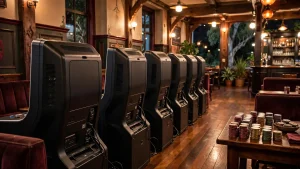
The guide explains how to verify gaming-room access and interpret searches for airport, CBD, Parkes, cashless and online pokies.
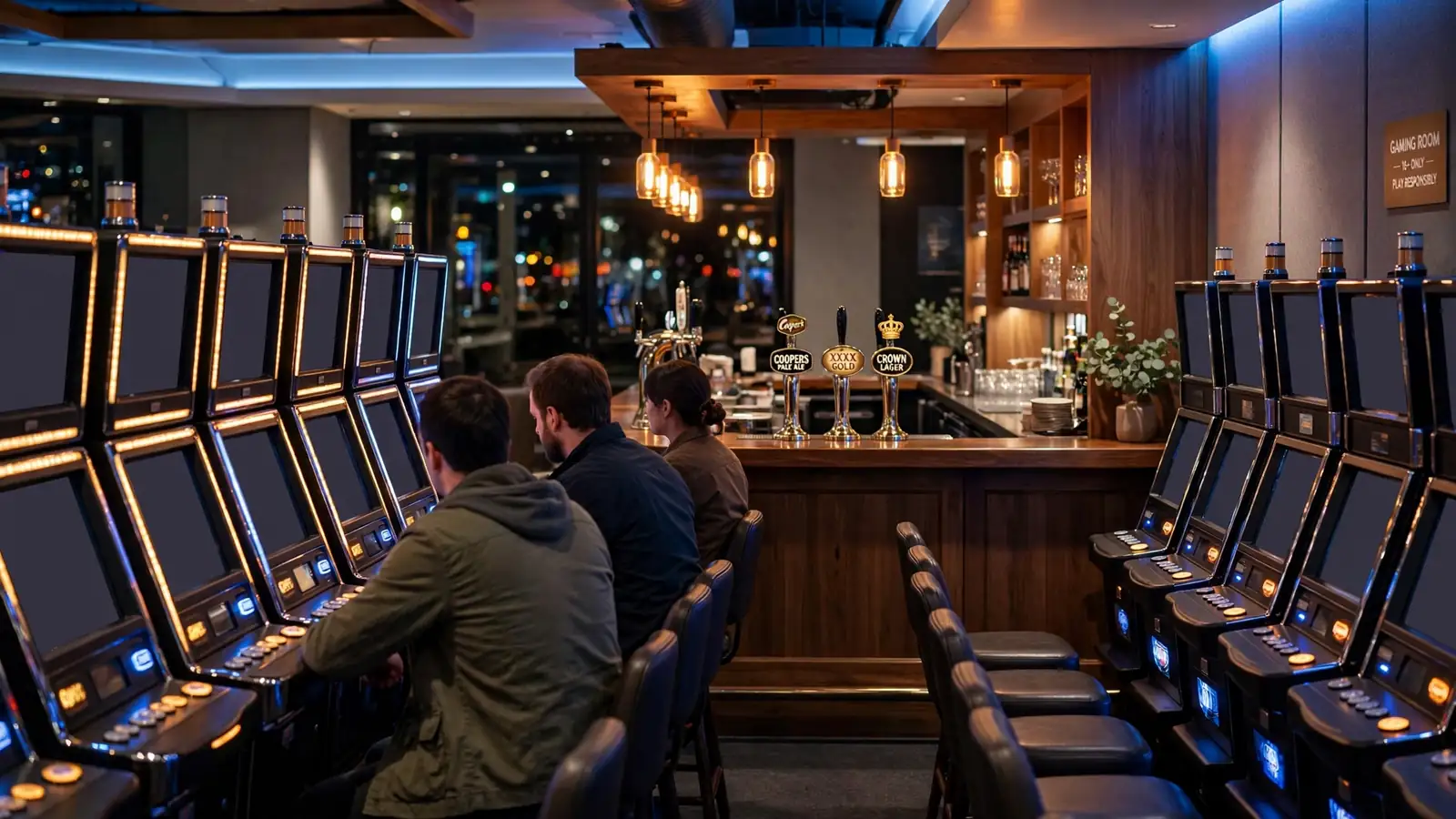
Opening information is a practical question, not a promise that a particular venue or gaming room is operating. If you are planning a visit, check the venue’s own current information and confirm directly before travelling. A general business-hours listing may be stale, may cover the venue rather than a separate gaming area, or may not reflect a temporary change. Treat it as a lead, not confirmation.
First, check that the listing refers to the place you intend to visit. A venue can have several facilities, and the hours shown for its dining or bar areas do not necessarily establish when its gaming room is accessible. Look for information that specifically identifies the relevant area and its operating times.
Then check when that information was last updated. A current notice from the venue carries more weight than an undated directory entry. If the hours are unclear, call and ask a precise question: is the gaming room open at the time you plan to arrive? If you need to know whether it will remain open later, ask about the expected closing time as well. A direct answer is more useful than interpreting a broad label such as “open”.
For a visit early in the day or late at night, confirm the hours for that particular time rather than relying on a venue’s overall schedule. A listing that says a venue is open does not, by itself, settle whether its gaming room is open then. Nor does a sign or old online post prove that today’s arrangements are unchanged.
Keep the check close to your trip. Information saved earlier can become outdated, and a venue’s published schedule may not capture a short-notice change. If you cannot reach anyone, avoid treating silence or an old listing as confirmation. You can check again before leaving rather than making the journey on an assumption.
There is a separate question: what requirements apply while gaming machines are running? A news report published by regionriverina.com.au describes a rule taking effect from 1 July: venues with more than 20 gaming machines would need a dedicated responsible gambling officer (RGO) on duty while those machines operate. The report also describes a one-month grace period for venues to remove signage and put the officer arrangements in place.
Regulatory Requirement
A news report describes a rule taking effect from 1 July: venues with more than 20 gaming machines would need a dedicated responsible gambling officer (RGO) on duty while those machines operate.
That is a regulatory and harm-minimisation requirement, not a timetable. It does not tell you whether a Canberra venue is open, whether its gaming room is operating at a particular hour, or whether a specific venue falls within the rule. Do not use the presence of an RGO—or a notice about one—as evidence of opening hours. For a Canberra venue, check which local requirements apply and whether they are in force; a report about the rule is not confirmation of a particular venue’s status.
Keep the two checks separate in your notes:
| What you need to know | What to confirm |
|---|---|
| Whether you can visit now | Current opening information for the venue and, separately, its gaming room |
| Whether machines are operating | Direct confirmation of gaming-room access at the time you plan to go |
| What oversight applies during machine operation | The relevant requirements for that venue and jurisdiction |
This distinction matters because the questions have different answers and may rely on different information. An open dining area does not establish that machines are available. A rule about staffing during machine operation does not establish that the room is operating.
Opening details cannot answer a question about a pokie’s payout percentage. A venue’s hours, a room’s availability and a machine’s return setting are separate matters. If you are comparing games, look for information specific to the game and setting rather than drawing a conclusion from when a venue is open. No opening-hours notice can promise what a particular session will return.
For a simple decision, record the venue name, the source of the hours, whether the gaming room was specifically confirmed, and when you checked. If the source only gives general venue hours, mark the gaming-room status as unconfirmed. That small distinction can save a wasted trip—and prevents a broad listing from doing work it cannot do.
The practical test is straightforward: confirm the current schedule with the venue, confirm that it covers the gaming room, and keep regulatory requirements separate from access information. If either answer is unclear, treat the visit as unconfirmed. Hours are not guarantees.
Choosing pokies to play in Canberra means checking the practical details that shape your experience, such as licensing, deposit options and payout methods. Use these notes as a quick reference when deciding which details matter most to you.
Playfina Casino
Playfina Casino is listed with a Curacao eGaming licence held by Hollycorn N.V. since 2017. Its minimum deposit is A$20–30, depending on the offer.
House of Pokies
House of Pokies lists an international iGaming licence, though the jurisdiction is not named in the source. PayID payouts are stated as taking 1–24 hours, and the minimum deposit is A$30, or A$10 via PayID.
Wild Tokyo
Wild Tokyo is listed with a Curacao licence and a A$10 minimum deposit. Its stated payout times are 30–60 minutes for crypto and 1–5 days for fiat.
DragonSlots Casino
DragonSlots Casino is listed with a Curacao Gaming Authority licence, with Jumpman Gaming Ltd named as the operator.
Kingmaker
Kingmaker lists a A$30 minimum deposit. Its stated payout times are around 90 minutes for crypto and 1–5 days for fiat.
7Bit Casino
7Bit Casino is listed with a Curacao licence and is operated by Dama N.V.
MrPacho
MrPacho lists a A$30 minimum deposit. Its stated payout times are 30–120 minutes for crypto and 24–72 hours for fiat.
Vegaz Casino
Vegaz Casino is listed with Curacao licence number OGL/2024/1335/0780. Its minimum deposit is EUR 20.
LevelUp Casino
LevelUp Casino is listed with Curacao eGaming licence OGL/2023/174/0082, associated with Dama N.V. Its minimum deposit is A$15.
Rollero Casino
Rollero Casino is listed with Curacao Gaming Control Board licence OGL/2023/176/0095, held by Hollycorn N.V.
“Best” only has meaning once you choose the criterion. A pokie that suits you because its rules are easy to follow may not be the one you would choose for a published return figure. And neither description makes it a reliable way to win. For anyone comparing Canberra venues or looking for the best-paying pokies, the useful starting point is a like-for-like comparison of information that can actually be checked.
Return to player, or RTP, is a theoretical measure of how much a game returns across play over time. It is not a forecast for your session, and it does not say what you will receive from a particular spin.
There is another detail worth checking: a specialist review reports that some game providers let casinos choose between different RTP settings for the same pokie. That means the game’s title alone may not tell you which return setting applies at a particular casino. If you are comparing the same game in different places, look for the setting stated for that specific version rather than relying on a figure attached to the game generally. If the setting is not disclosed, you cannot make a sound RTP comparison from the title alone.
 Geelong Pokies: Checking Hours and Gaming AccessLearn how to verify gaming-room access, interpret venue listings and assess claims about opening hours, payments and “best paying” pokies.
 Best Pokies in New South Wales: A Practical GuideThis guide focuses on verifying venues, hours and machine mechanics—not ranking a single “best” option—and explains the 18+ rule and pre-commitment limits.
Keep the comparison narrow. Match the game and its stated setting, then record what is actually disclosed. A figure is useful only if you know which version it describes. A headline return without that context is incomplete.
Each pokie spin is determined by a Random Number Generator and is independent of the spin before it. A run of wins does not make a loss “due”; a run of losses does not make a win more likely next time. The machine has no memory in the sense that matters to a player making a prediction.
That independence changes how you should read claims about performance. Recent results, a streak, or a machine that appears “ready” cannot establish that it is more likely to pay on the next spin. Nor can a short personal session prove that one game is better than another. Past outcomes may be interesting to recount, but they are not a dependable comparison measure.
An RTP setting describes long-run theoretical behaviour, not a promise about what happens in the next play. Both points matter: check which RTP setting is being described, then avoid treating it as a personal forecast.
Attention: An RTP setting describes long-run theoretical behaviour, not a promise about what happens in the next play.
A practical comparison table can separate what is known from what is assumed. For each pokie you are considering, note the exact game title, the venue or setting where you encountered it, and any RTP information stated for that version. Add a note if the information is unclear or absent. That last entry is not a flaw in your table; it is an honest result.
You can also compare how clearly the game explains its rules and features, if that information is available to you. This is a usability criterion, not evidence of a higher return. Keep it separate from RTP so a game that is easier to understand does not quietly become “better paying” by association. If two games cannot be compared on the same disclosed measure, say so rather than forcing a ranking.
This approach applies whether you are considering a pokie in a Canberra venue or assessing a claim about a game elsewhere. A location or a familiar title does not, by itself, establish a game’s RTP setting. And the phrase “best paying” should prompt a request for a specific, checkable measure—not an expectation that a machine will produce a particular result.
A ranking is only as useful as its method. Check whether it compares the same stated measure across the games, whether the RTP setting applies to the version being discussed, and whether the wording turns a theoretical figure into a promise. If those points are missing, the ranking may look precise while telling you little about the comparison.
For a personal shortlist, decide what matters first: a disclosed RTP setting, clear rules, or some other observable feature. Then compare only on that basis and keep the criterion visible. There is no universal winner for every player, and no table can remove chance from the outcome.
A measured comparison can help you assess claims. It cannot tell you what the next spin will do.
Searching for online pokies in Canberra can make an internet service sound like a local venue. Legally, the important distinction is not the suburb or city named in a website’s description; it is whether an operator is providing prohibited real-money online gambling to people in Australia.
The Interactive Gambling Act 2001 prohibits companies from offering real-money online casino games, including pokies, to customers physically located in Australia. No Australian licence has been issued for an online casino, so there is no Australian-licensed online casino to compare. A site’s use of Canberra in its name, advertising or payment information does not change that position.
The Act is directed at operators, rather than making an individual player liable simply for using an offshore site. Australians may be able to access offshore sites that accept them, but that does not make the service lawful for the operator to provide in Australia, or make the site a safe equivalent of a domestic venue.
Legal Risk
If an offshore casino refuses to pay winnings, an Australian player has no legal recourse in Australia to recover them.
The practical risk is considerable: if an offshore casino refuses to pay winnings, an Australian player has no legal recourse in Australia to recover them. A promised payout, a large maximum bet or a “no deposit” offer does not remove that problem. Nor does a claim that a game pays well establish that the operator is authorised to serve Australian customers.
ACMA, the Australian Communications and Media Authority, is the main domestic regulator enforcing the Interactive Gambling Act 2001. It can block access to illegal offshore gambling sites, and internet service providers must comply with its blocklist. A site being visible at one moment is therefore not proof that it is lawful, reliable or likely to remain accessible.
A Canberra label is not evidence that an online casino is based in Canberra. Likewise, words such as “real money,” “high limit” or “maximum bet” describe marketing claims, not legal status or payment security. A bonus offer cannot turn a prohibited online casino service into a licensed Australian product.
BetStop is another point where the distinction matters. It applies to Australian-licensed operators and does not bind offshore sites. It should not be treated as a safeguard that will prevent an offshore gambling account from accepting a person who has self-excluded through the Australian system.
If you are assessing any gambling account or transaction, do not assume that a payment method or a polished website proves licensing, fairness or a route to recover funds. Before a first withdrawal, check what identity and address documents the operator requires; verification may involve providing both. Even completing those checks does not create Australian legal recourse if the operator withholds a payout.
 Best Pokies in Perth: What to Check Before You GoLearn how to confirm that a Perth venue and its pokies are both operating, and compare venues using official hours and direct…
 Big Red Pokies Online in Australia: Free Play GuideLearn what can be verified about free play, Australian availability and game access, and why labels alone do not confirm the terms.
That distinction matters more than the search wording. “Online pokies near Canberra” may sound like a location request, while “best-paying pokies” or a no-deposit offer may sound like a comparison. Neither changes the legal framework for real-money online casino games. Land-based venues and internet gambling are different questions, and a local place name does not bring an online casino under an Australian licence.
For a Canberra resident, the concise answer is that no Australian-licensed online casino exists. Offshore operators are the ones that may accept Australian players, but they do so without the protection of an Australian casino licence, and ACMA may block access. Availability is not protection.
A search for pokies near Canberra Airport is a question about location, not proof that a gaming room is inside the terminal or close to it. The wording can refer to places around the airport, somewhere in North Canberra, or a wider part of the city. Those are different areas to check, and a broad result does not establish how far a venue is from the airport.
Treat proximity as a detail to verify, not an assumption. A map result can help you identify a possible destination, but check that the listing refers to a physical venue with pokies rather than a general club, accommodation provider or unrelated business. Then confirm the venue’s own address through a direct or official listing. Only after that can you compare the address with the airport and decide whether the location suits your trip.
Distance also depends on what you mean by “near”. Straight-line distance and a practical route are not the same measure. If you are travelling by road, the route shown by a map is more useful than the visual gap between two pins. If you are walking or using public transport, check the relevant route for that mode instead. A nearby-looking result may not be convenient for your actual journey.
Pokies in Canberra Airport suggests a venue within the airport itself. Pokies near Canberra Airport suggests somewhere in the surrounding area. Neither phrase confirms that a venue is located there. Likewise, a result described as being in North Canberra or near the CBD should not be treated as an airport-area result without checking its address and route.
The same care applies when a location label is unclear. A reference to Canberra may be confused with another place name or region, while a map may group results under a broad area. Read the full address rather than relying on a short label. If the listing does not make the location clear, ask the venue to confirm it before travelling.
For a useful comparison, record the venue name, street address, map route and travel mode. Keep those fields separate: “near the airport” is not a measurable distance, and “Canberra” alone is not a precise location. If you cannot confirm an address and route, you cannot make a dependable proximity comparison. A neat map pin is not a receipt.
This approach also prevents a common mix-up between an airport-related result and a venue inside the airport. Check the address against the airport location, then assess the route from the point you will actually start from. A person arriving at the terminal and a person leaving from another part of Canberra may need different route comparisons.
So, if you are looking for pokies around the airport, focus first on the confirmed address and then on the route that matters to you. That gives you a practical basis for judging proximity without turning a search label into a claim about where machines are available.
A venue comparison is only as useful as the information behind it. For Canberra pokies venues, separate claims about a venue’s oversight from claims about its machines: a procedure for responding to gambling harm does not establish a machine count, a particular game’s settings or better play for customers. Those are different criteria.
One reporting detail worth checking is whether a venue keeps a gambling incident register. A report by regionriverina.com.au describes a requirement for venues to record incidents, including occasions when a patron shows signs of being at risk of, or affected by, gambling harm. The register concerns recorded incidents and responses; it is not a scorecard for machines and does not show that one venue offers better odds than another.
A register where venues record incidents, including occasions when a patron shows signs of being at risk of, or affected by, gambling harm. It is used for oversight and documenting responses, not for tracking machine performance.
If you are comparing venues, look for a clear explanation of how staff recognise and respond to signs of harm, and how incidents are recorded. A register may document that an event occurred and provide a basis for oversight. It cannot, by itself, tell you how many pokies are on the floor, which titles are available, or how any individual machine is configured.
That distinction matters when a venue is described as the best pokies venue in Canberra. “Best” needs a defined measure. If the claim is about responsible-gambling oversight, ask what process supports it. If the claim is about machine choice or performance, incident records do not answer it. A label is not a measurement.
Responsible-gambling oversight is also not a substitute for machine-level information. A venue may have a process for documenting concerns without publishing technical details about each pokie. Keep the categories separate when you assess a comparison: harm-response procedures belong in one column; machine details belong in another. If a claim crosses those categories without evidence, it has not established the comparison it appears to make.
A practical table can keep the criteria honest:
| Comparison point | What it can establish |
|---|---|
| Incident-recording procedure | Whether reported concerns are documented |
| Staff response process | How a venue says it handles signs of gambling harm |
| Machine-specific information | Details about machines, where independently stated |
Do not treat a completed register as proof that harm has been prevented. Nor does a recorded incident alone establish how a venue handled it. The useful question is whether the venue can explain its process and how oversight works, rather than offering a broad safety label.
For a machine-level comparison, look for information that actually refers to machines and can be checked on the same basis across venues. A general statement about compliance or staff procedures cannot fill that role. Conversely, machine details would not tell you whether staff record and respond to signs of harm. Different evidence answers different questions.
The strongest comparison is the one that makes its criterion explicit and keeps each claim within the evidence supporting it. If you care about oversight, assess the reporting process. If you care about the pokies themselves, assess machine-specific information. Do not let one stand in for the other. Different columns. Different answers.
“24-hour pokies” describes the access someone is looking for; it does not establish that a Canberra venue operates around the clock. The same applies to a claim that a venue is open now. A phrase in a listing, headline or search result is not proof of current operating hours, and it cannot tell you whether the gaming area is available at that time.
Keep the comparison narrow. If round-the-clock access is your deciding criterion, you need a reliable, current statement about the venue’s hours and the hours that apply specifically to its pokies. General venue hours may refer to food, bars or other facilities, not gaming. “Open” can also mean the doors are open while a particular service is not operating. Treat those as separate details rather than assuming one answers the other.
No Canberra venue should be described as a 24-hour pokies venue unless that operating arrangement has been confirmed. If the information you find does not clearly cover the gaming area and the relevant time, the accurate conclusion is that round-the-clock access has not been established. That is less exciting than a blanket claim. It is also more useful.
Age and operating hours answer different questions. In Australia, the legal age for gambling, including online pokies, is 18. Meeting that age threshold does not confirm that a venue is open, that its gaming area is operating, or that access is available at a particular time.
It is also worth deciding whether a long session is actually the right criterion for you. Responsible-gambling tools can help set boundaries: deposit limits restrict what you put in, loss limits set a boundary around losses, and session time limits help contain the time spent playing. Self-exclusion is an option for people who want to prevent themselves from gambling. These tools support personal limits; they do not provide evidence about a venue’s opening schedule.
A practical comparison table can keep the claims separate:
| Criterion | What it tells you |
|---|---|
| Venue hours | When the venue says it operates |
| Gaming-area hours | When pokies are available |
| Round-the-clock claim | Whether continuous access is specifically confirmed |
| Personal limits | How you can set boundaries on spending or session time |
For a decision based on access, the key distinction is between a venue being open and pokies being available throughout the day and night. Do not let one stand in for the other.
A reference to Crown alongside Canberra does not establish that a Crown casino, or its pokies, is located in the city. The words may appear together because someone is trying to identify a venue, compare locations or check a particular machine. They are a starting point for verification, not proof of a local address.
Separate the question into parts: Is there a venue in Canberra using the Crown name? Is the specific venue being discussed actually in Canberra? Does it have a pokies room? Each claim needs evidence tied to the same location. A name appearing in a map result, directory entry or discussion is not enough on its own; entries can be incomplete, outdated or refer to a different place.
For a useful check, find the venue’s own current address and confirm that the same venue information describes the facilities you are asking about. Make sure the address is in Canberra rather than another city, and that the details relate to the venue itself rather than a search result that has combined unrelated terms. If those details do not line up, do not treat the listing as confirmation.
Attention: A reference to Crown alongside Canberra does not establish that a Crown casino, or its pokies, is located in the city.
“Best pokies room” also depends on what you mean by best. A room cannot be judged from its name alone, and a result that calls it the best does not establish a ranking or identify a Canberra venue. The useful comparison is the one tied to a criterion you care about, such as location or a facility detail that can be confirmed. Without that, the label says little. A neat headline is not a location check.
A maximum cash payout is a separate claim. Do not assume there is one standard amount across pokies or venues, or that a figure mentioned for one machine applies to another. Check the terms that apply to the exact machine and venue, and distinguish a machine’s stated prize conditions from any rules governing how a venue handles payment. If the source does not identify the machine and location, the number is not a reliable basis for comparison.
Keep the distinction simple: a Crown-related result may point you towards something to investigate, but it does not by itself show that Crown pokies are available in Canberra. Confirm the place first; then assess any claims about its machines or payouts. No shortcut.
A central Canberra label is not enough to establish that a club has pokies. Check the venue’s exact address and confirm that its own current information identifies gaming facilities there. A club name, a map pin or a directory entry can help you locate a place, but none alone confirms machine availability.
For a useful comparison, separate location from the details you want to know. Record the venue address, whether its information explicitly mentions pokies, and any machine or access details it publishes. If a listing does not provide a detail, leave that cell blank rather than treating an estimate or an old description as a fact. A longer list is not a better list if its entries cannot be checked.
The same discipline applies to claims about the “best” pokies in the CBD. A venue label does not establish which games are installed, how many machines it has or what settings apply to a particular game. Those details need evidence tied to the venue or machine, not a general claim about Canberra clubs. The comparison depends on what matters to you—and on what can actually be verified.
If you are considering self-exclusion from pokies, ask the relevant venue directly about its process, what locations it covers and how the request is handled. Do not assume that a general online tool automatically excludes you from a physical gaming room. BetStop applies only to Australian-licensed operators; it does not bind offshore sites, and it is not proof of a club’s local self-exclusion arrangements.
Responsible-gambling tools can include deposit limits, loss limits, session time limits and self-exclusion. They are practical controls, not evidence that a particular CBD venue has machines or a particular policy. The legal age for gambling in Australia, including online pokies, is 18.
A sound CBD shortlist therefore needs a traceable venue address and venue-specific confirmation of the details you plan to compare. If those points are unclear, keep the entry unconfirmed instead of filling the gap with a guess. Sparse, but honest.
A reference to Parkes narrows the area someone has in mind; it does not establish that pokies are available at a particular address. Treat the suburb name as a location clue, not as confirmation of a venue or its facilities.
When a result places a venue in Parkes, check that the address is actually in the suburb and that the venue’s own information explicitly refers to pokies or gaming machines. A map pin, category label or nearby landmark can help identify a place, but none of those details confirms what is inside. If the listing only describes dining, accommodation or events, do not infer that it also has a gaming area.
The same distinction applies to broader Canberra results. A result may refer to the territory generally, use a Canberra address for administration, or describe a place elsewhere in the region. Read the address and the description together. If they do not clearly connect the venue, the suburb and the gaming facilities, the location claim remains unconfirmed.
Be cautious with pages that repeat a venue name without providing a current address or a direct description of its facilities. A copied directory entry can keep circulating after details change. Look for information published by the venue itself, and compare the stated location across its own pages before relying on a third-party listing. That checks the claim without turning a search result into a recommendation.
“Best” also depends on what you are trying to establish. If the question is whether a place is in Parkes, the address is the deciding criterion. If it is whether pokies are offered there, the venue’s explicit description is the relevant evidence. Those are separate checks. A suburb label cannot answer both.
Do not treat a map search for pokies in Parkes as a confirmed venue list. It can help you orient yourself, but only a clear, attributable statement about the place and its facilities supports the conclusion. Location first; claim second.
A payment method and a pokie machine’s payment setup are different things. PayID is a way to route a bank transfer using an alias, such as an email address, mobile number or ABN. It operates through Australia’s New Payments Platform (NPP), which major banks support and which uses end-to-end encryption.
That description concerns bank transfers. It does not establish that a Canberra venue has cashless pokies, that a particular machine accepts PayID, or that a venue offers any specific payment arrangement. A mention of PayID alone is not evidence about how a pokie is funded or whether a gaming room is operating.
Keep the comparison criteria separate: PayID describes how a transfer can be addressed; “cashless” describes a payment feature someone may be asking about. The first does not prove the second. If you are assessing a claim about a venue or machine, look for information that explicitly identifies that venue and feature rather than inferring it from a payment-method reference. Otherwise, the conclusion is not supported.
Newcastle in the same phrase as Canberra creates a separate location ambiguity. It may reflect two places being combined in a single description, but the wording itself does not show that a Newcastle venue is in Canberra or that a Canberra venue has been identified. Treat each location as its own question. A place name is not proof of a venue, and combining place names does not supply a distance, machine detail or cashless-payment fact.
For a useful comparison, separate three things: the location being referred to, whether a specific venue is identified, and what payment feature is actually described. Keep PayID in the payment-method column, not as a shortcut for machine capability. That distinction is plain, if less exciting than a neat label.
Yes, Australians can legally play on offshore sites that accept them, but offering real-money online pokies to Australians without a domestic licence is illegal for operators. No Australian-licensed online casino exists, and you have no legal recourse in Australia if an offshore casino refuses to pay.
Check the wagering requirement and what it applies to before accepting a bonus. For example, a $500 bonus with 40x wagering requires $20,000 in bets; if 35x applies to a $500 deposit plus a $500 bonus, it requires $35,000 in bets. Free spins may also cap withdrawable winnings.
E-wallets such as Skrill and Neteller are popular for their speed, making them a common option for players prioritising faster transactions.