A practical guide to checking stated card options and understanding why deposit, withdrawal, game, and bonus terms are separate.
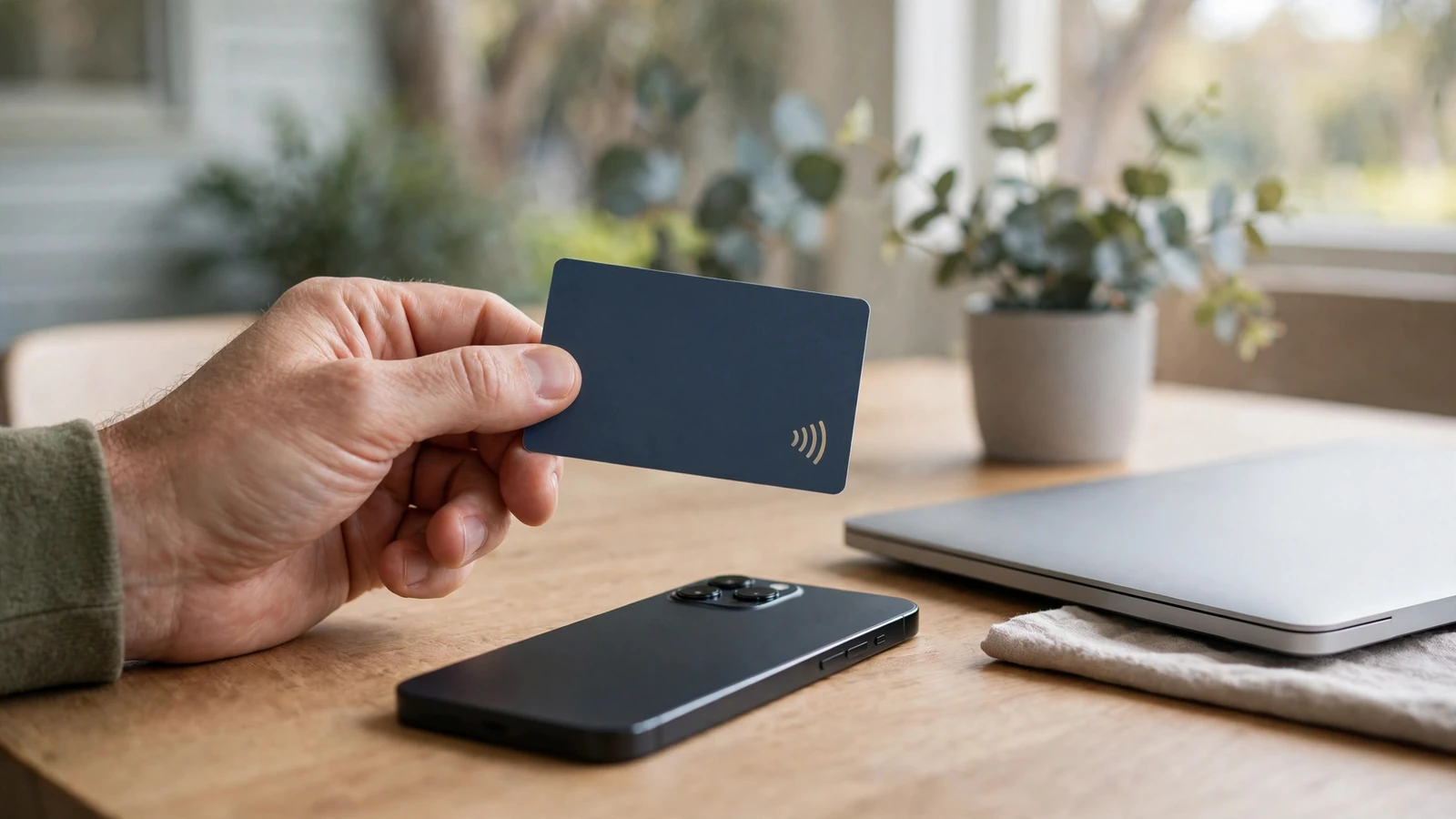
In Australia, tapping a card is an ordinary part of everyday shopping. Contactless credit and debit cards are accepted almost everywhere, so many people are used to paying without handling cash or entering card details for each transaction. That familiarity can make Mastercard seem like an obvious option to look for when considering an online service. It does not, by itself, establish that a particular service can accept it.
Mobile wallets are similarly familiar. Google Pay and Apple Pay are accepted almost everywhere in Australia, and people may move between a physical card and a phone payment depending on the situation. The practical habit is flexibility: the payment method used at a shop need not be the one someone expects to use online.
Australians are also comfortable using services connected to their bank accounts, including PayPal. Taken together, cards, mobile wallets and bank-linked services form a broad everyday payment landscape. But familiarity in general commerce is not a guide to whether a payment route is available for a specific purpose. A card’s presence in someone’s wallet, or a wallet app on their phone, answers only what they can use in ordinary settings.
If you plan to use Mastercard at an Australian casino, check the payment options and conditions shown at the cashier before depositing. This list gives you a few operator details to consider, but the information provided does not confirm Mastercard acceptance for any of them.
Playfina Casino
You can note Playfina’s Curacao eGaming licence, held by Hollycorn N.V. since 2017, and a minimum deposit of A$20–30 depending on the offer. The available details do not confirm Mastercard acceptance.
House of Pokies
You can consider House of Pokies’ PayID payout speed of 1–24 hours and A$30 minimum deposit, reduced to A$10 for PayID. Its licence jurisdiction is not named in the source, and Mastercard acceptance is not specified.
Wild Tokyo
You can note Wild Tokyo’s A$10 minimum deposit and its stated payout speeds: 30–60 minutes for crypto and 1–5 days for fiat. It holds a Curacao licence; Mastercard acceptance is not confirmed by the available details.
DragonSlots Casino
You can note that DragonSlots Casino is licensed by the Curacao Gaming Authority and operated by Jumpman Gaming Ltd. No payment or deposit details are provided to establish whether Mastercard is accepted.
Kingmaker
You can note Kingmaker’s A$30 minimum deposit and stated payout speeds of about 90 minutes for crypto and 1–5 days for fiat. The available information does not specify Mastercard acceptance.
7Bit Casino
You can note that 7Bit Casino is licensed in Curacao and operated by Dama N.V. No deposit or payment-method details are provided, so Mastercard acceptance cannot be confirmed from this information.
MrPacho
You can note MrPacho’s A$30 minimum deposit and stated payout speeds of 30–120 minutes for crypto and 24–72 hours for fiat. The available details do not say whether Mastercard is accepted.
Vegaz Casino
You can note Vegaz Casino’s Curacao licence, OGL/2024/1335/0780, and its EUR 20 minimum deposit. The provided information does not confirm Mastercard acceptance.
LevelUp Casino
You can note LevelUp Casino’s Curacao eGaming licence, OGL/2023/174/0082, its operator Dama N.V., and its A$15 minimum deposit. Mastercard acceptance is not specified in the available details.
Rollero Casino
You can note Rollero Casino’s Curacao Gaming Control Board licence, OGL/2023/176/0095, held by Hollycorn N.V. No payment or deposit details are provided to confirm Mastercard acceptance.
That distinction matters when you encounter claims about an Australian casino accepting Mastercard. Widespread contactless use describes Australian payment habits; it does not verify a casino’s payment arrangements. Nor does the everyday acceptance of mobile wallets or PayPal show that those methods are available for a particular online transaction. The setting and the merchant matter.
A useful way to read payment claims is to keep those categories separate. General familiarity tells you what Australians are accustomed to using. It cannot stand in for current, specific information about an individual service, and it should not be treated as proof that any card or wallet will work there.
The local pattern is clear: people switch between payment tools with little fuss. The inference is not. A payment method common in Australian shops is not automatically a payment option in every online context. Familiarity is context, not confirmation.
A cashier can show which payment methods an operator currently presents, but a card brand appearing in general site copy is not the same as a confirmed deposit option. If you are checking a casino’s payment information, look for Mastercard specifically in the cashier’s deposit area and read the conditions attached to that option. Do not infer acceptance from a Mastercard logo, a reference to “cards”, or a page describing card payments in broad terms.
 MiFinity Casinos in Australia: What Can Be VerifiedLearn why a payment option cannot make Australian online pokies lawful, and how the article separates MiFinity claims from unverified deposits, withdrawals…
 Casino Sites That Accept Credit Cards in AustraliaUnderstand Amex acceptance, deposits, withdrawals and declined payments, alongside the legal position: ACMA enforces the Interactive Gambling Act 2001.
The distinction matters because the practical details belong to the individual operator and can change. A payment-method page may be general, while the cashier may show what is available for your account or location. If the cashier does not identify Mastercard as a deposit method, treat that as unresolved rather than assuming another card option will work the same way. A casino with Mastercard deposits cannot be identified from a general payment description alone.
Before entering payment details, inspect the cashier’s listed deposit methods and any accompanying terms. Confirm that the displayed option says Mastercard and that it is presented for deposits, rather than merely mentioning the brand elsewhere. Then read the operator’s explanation of eligibility and any conditions shown for the method. If the wording is unclear or the option is absent, ask the operator for clarification before proceeding.
This is a verification step, not a reason to try a card and see whether it goes through. A displayed payment choice does not by itself tell you whether your particular card or transaction will be approved. Card issuer restrictions can also matter: Australian banks may block gambling-related transactions on Amex cards at issuer level, and a similar assumption should not be made about Mastercard without checking the relevant issuer and operator terms. A failed payment is not a reliable way to discover the rules.
Avoid relying on a third-party summary when the cashier and current operator terms are available. A review can be out of date, or it may describe one account’s options rather than yours. The useful evidence is specific: the method named in the deposit cashier, the conditions attached to it, and a clear answer from the operator if anything remains ambiguous.
A search for a small Mastercard deposit does not establish that a casino accepts Mastercard, nor that it permits that particular amount. Deposit minimums are not universal card rules. They may depend on the operator and on the payment route it makes available. Check the cashier and its terms for the amount shown before you decide whether to continue; do not transfer a figure from a different site or from a generic payment page.
Processing speed needs the same care. A card payment may be submitted through the cashier, but that does not establish how quickly a particular Mastercard deposit will be handled. No specific processing time should be inferred from the card brand alone. If timing matters, look for an explicit statement from the operator about that method and clarify whether it describes submission, approval, or the point at which funds appear in the account.
For an Amex deposit, the described process is to choose Amex in the cashier, provide the card information and an amount in Australian dollars, then submit the transaction. That is an Amex procedure only; it does not demonstrate that Mastercard is available, or that its steps, minimums or timing match. Different labels, conditions.
Use a short checklist rather than treating a Mastercard mention as a green light:
If the answer to the first question is no or uncertain, you do not have a sound basis to describe that site as accepting Mastercard deposits. If the method is listed but the terms leave an important point unanswered, pause and seek clarification instead of filling the gap with assumptions. “Cards accepted” is not precise enough when you need to know whether a specific card brand and transaction are supported.
This approach also keeps “best” tied to a meaningful criterion. A site cannot be judged better for a Mastercard deposit merely because a page names the brand. The relevant comparison would require current, specific details about availability and the conditions that matter to you; without those, a ranking would pretend to settle a question it has not answered. For the immediate decision, use the cashier’s explicit listing and the operator’s written terms, not an assumed deposit amount or processing promise.
A reference to pokies and a reference to Mastercard can appear together without establishing that the card is accepted for a particular service. Those are separate claims: one concerns the type of online gambling service, while the other concerns a payment brand. Combining the terms in a heading or description does not verify either claim.
The distinction matters because broad labels can hide important differences. “Card payments” may refer to a general category rather than a named card network. “Mobile casino” may describe how a site is viewed, not which payment methods it supports. And a statement about a casino’s cashier does not, by itself, establish anything specific about pokies. The wording needs to connect the payment method, the service and the relevant conditions before it can support a precise conclusion.
A reference to pokies and a reference to Mastercard are separate claims; combining them in a heading does not verify that the card is accepted for that specific service.
A claim that a service accepts cards is not equivalent to a claim that it accepts Mastercard. Cards are not interchangeable simply because they share a familiar shape or are entered into a similar payment form. The payment brand matters, as do the terms attached to the particular service.
American Express illustrates why broad assumptions can fail. A specialist review has reported that some online casinos do not accept Amex. That is a limited observation, not a rule for every operator or a reliable guide to Mastercard. It shows only that acceptance of one card brand cannot safely stand in for acceptance of another.
The same care applies in reverse. A statement naming Mastercard would not automatically establish acceptance of Amex, Visa or every other card. Nor would it say whether the statement applies to all services offered through a site. Exact wording matters more than a general label.
The phrase “Australian online pokies with Mastercard” bundles several ideas into one. It can sound like a single confirmed feature, although it combines a location, a type of gambling service and a payment method. A responsible reading separates those parts rather than treating the combined phrase as proof.
This is not a technicality. A payment claim may be general, while a service claim may be specific; neither automatically supplies the detail missing from the other. Similarly, describing a site as mobile-friendly says nothing by itself about card acceptance. A mobile screen is a way to access a service, not evidence about the payment arrangements attached to it.
 Paysafecard at Australian Casino Sites: What’s VerifiedSee why everyday comfort with digital payments cannot confirm casino acceptance, and why deposit support and withdrawal options need separate verification.
 Casinos That Accept Ethereum (ETH) in AustraliaLearn why crypto speed does not confirm casino ETH support, and why the cashier and its payment instructions are the practical evidence…
Be cautious with labels such as “best” as well. Best by what measure: a named payment method, clear terms, or some other criterion? Without a stated and substantiated criterion, a ranking does not tell you whether Mastercard is accepted for a particular service. The word adds emphasis, not verification.
When you encounter a payment statement, notice what it names and what it leaves general. Does it identify Mastercard, or merely say “cards”? Does it refer to the service in question, or to the site as a whole? Does it describe an operator’s current terms, or repeat a broad claim without making its scope clear?
Those distinctions help prevent one statement from being stretched into another. An Amex reference is about Amex; it is not a Mastercard confirmation. A general card reference does not name a particular network. And a mention of pokies does not prove that a payment method is available for them. Each claim should be read only as broadly as its wording allows.
The practical standard is simple: do not treat related terms as interchangeable. A card brand, a payment category, a mobile format and a gambling service each describe something different. If a claim joins them, its wording should make clear how they are connected. Otherwise, the connection is an assumption, not a verified feature.
That is the useful distinction when reading any statement linking pokies and Mastercard: the subject matter and the payment method are separate, and one does not confirm the other. A polished label can make them look like a package. It is still just a label.
A page that mentions Mastercard is not, by itself, evidence that a particular casino accepts it. Read the claim as a statement that needs a clear scope: does it concern a deposit, a withdrawal, or merely a card brand mentioned alongside other payment methods? Those are different claims, and one should not be used to imply another.
For Australian readers, this distinction matters before any comparison. Online casino operators are prohibited from providing real-money casino games to people in Australia, and Australian consumer law does not protect players using offshore casinos. Payment information should not be mistaken for approval, a recommendation, or a sign that a service is lawful to use.
Start by checking what the page actually says about Mastercard. “Cards accepted” is less specific than a statement that names Mastercard and identifies the transaction type. A brand may appear in a general payment list without the text making clear whether it applies to deposits, payouts, or both. If the wording does not answer that distinction, treat the claim as unclear rather than filling in the gap yourself.
Look for language that separates card networks. A statement about Visa does not establish anything about Mastercard. Nor does evidence about another card brand prove that Mastercard is available. The names may sit next to each other in a paragraph or menu; proximity is not confirmation.
The same discipline applies to claims about speed, fees and limits. A general promise about “fast card payments” does not establish a processing time for Mastercard. A fee statement without identifying the transaction or the payment method is incomplete. If a page gives a specific condition, check that it is attached to Mastercard and to the action you are assessing—not borrowed from a different method.
The strength of a payment statement depends partly on its source. An operator’s own information, a specialist review and a player comment are not interchangeable. Each can describe a different moment or experience, and none should be silently upgraded into a universal rule.
A specialist review reports that deposits using American Express are available at some Australian online casinos. That is a limited statement about Amex, not evidence that Mastercard is accepted at those casinos. It also should not be treated as a permanent market-wide finding. The payment methods shown by an individual service can change, so a review’s wording and date matter.
Attention: A specialist review's report on one card brand (such as American Express) is not evidence that Mastercard is accepted at those same casinos.
When two pages disagree, compare their scope before deciding that one has settled the issue. One may discuss a card deposit while another refers to a different transaction. One may describe a particular service, while another uses broad wording. If neither clearly identifies Mastercard and the transaction in question, the practical answer remains uncertain. No amount of confident phrasing repairs a missing distinction.
| What the page says | What you can reasonably take from it |
|---|---|
| Mastercard is named for a specified transaction | A claim is being made for that transaction; it is not automatically proof of other card functions. |
| “Cards” are listed without naming networks | The page has not established Mastercard specifically. |
| Visa or Amex is discussed | The statement applies to that named method, not Mastercard. |
| “Instant” or “fast” appears without a clear scope | The wording does not establish Mastercard processing speed. |
| A third-party page makes a broad claim | Treat it as that source’s claim, not a guarantee or a market-wide rule. |
A useful comparison records only what each statement actually identifies: source, named card, transaction type, and any stated condition. Leave a cell blank when the page does not supply the detail. That is more reliable than converting an unclear statement into a confident yes.
The key test is specificity. A credible-looking payment badge, a general reference to cards, or evidence that another card is accepted cannot answer whether Mastercard is supported for a particular purpose. Keep the claim narrow.
Not a small distinction.
A claim about a Mastercard withdrawal needs to answer two separate questions: whether a payment provider can receive payouts to that card, and how long the transaction takes. A reference to card payments generally does not settle either point for Mastercard. Nor does a stated withdrawal time for another card establish a Mastercard processing schedule.
The specific timing figure reported for Amex comes from a specialist review: it says a casino withdrawal to Amex can take as long as five days to clear. Treat that as a report about Amex, not as a standard for every operator or as evidence about Mastercard. Card networks and operator processes are not interchangeable just because both involve a card.
“Instant” is a strong claim, but it can describe different stages. A payment may be approved by an operator before funds reach the card account; a displayed processing status may also differ from a completed transfer. Without a clear explanation of what the term means, it does not tell you when money would be available.
The same distinction matters when wording refers to instant Mastercard payouts. Unless the statement names Mastercard and explains the timing it covers, it cannot support a conclusion about Mastercard specifically. A fast deposit claim is not a withdrawal-time claim, either. The two directions of a payment are separate processes.
If you encounter a statement about Mastercard withdrawals, look for details that make it testable: does it explicitly identify Mastercard, distinguish approval from receipt, and describe any conditions that affect timing? If the claim only says “card withdrawals” or gives a time for Amex, it does not provide a Mastercard estimate. If the wording promises an instant payout without defining the term, the practical meaning remains uncertain.
Also distinguish a general payment-method label from a statement about a particular card. A cashier may present options for deposits, while withdrawal rules can be described elsewhere. A card appearing in one context does not by itself tell you how payouts are handled. That distinction is particularly important when a page uses broad phrases such as “card payments” but does not specify the network or transaction direction.
The useful comparison is therefore not “instant” against a particular number of hours. It is whether the statement is specific enough to apply: Mastercard, withdrawals, and a defined point at which the time is measured. A timing figure attached to Amex cannot fill those gaps. Nor should a general promise be read as a guaranteed arrival time.
An "instant" claim may describe different stages, such as operator approval rather than the moment funds reach the card account. Without a clear explanation, it does not specify when money will be available.
For anyone assessing a claim about instant Mastercard withdrawals in Australia, the defensible conclusion is narrow: a specialist review’s Amex timing report says nothing about Mastercard payout availability or speed. It cannot establish that a Mastercard withdrawal is supported, that it is instant, or that it follows the same timetable as Amex.
That is not a minor technicality. “Card” is a category, not a timing promise. Until a claim identifies the payment method and the withdrawal stage it describes, the word “instant” has little measurable value. Clear wording matters more than a confident headline.
A game catalogue and a payment page describe different parts of an online service. The catalogue concerns what the operator makes available; the cashier concerns how account funds may be handled. One does not determine the other. A page displaying a card symbol, for instance, does not establish that every game can be accessed with that card, or that the card is accepted at all.
That distinction matters when Mastercard appears in a casino’s payment information. The term refers to a payment route, not a category of games. Descriptions such as “Mastercard games” can blur the two questions: whether an operator presents particular games, and whether it accepts a particular method for financial transactions. They should not be read as a claim that a card is attached to a game or changes how a game works.
The same separation applies to references to pokies. A game label does not confirm a payment option, and a payment option does not establish that any particular game is available. Payment rules belong to the operator’s account and cashier arrangements, rather than to individual game titles. Keep those criteria in separate columns when comparing information; otherwise, one can easily be mistaken for the other.
Identity checks are another distinct part of the process. Online casinos typically require customers to complete a Know Your Customer assessment before financial transactions. That requirement concerns customer verification, not the choice of game or the card brand. A reference to Mastercard therefore says nothing about whether an account has completed verification, and a verification step does not establish which payment methods an operator supports.
This is a useful distinction in any discussion of casino games and card payments, but it does not make real-money online casino services lawful in Australia. The Interactive Gambling Act 2001 prohibits operators from providing such services to people physically located in the country. Australian consumer law also does not protect players using offshore casinos. A payment label or account check does not change that position.
For clear reading, separate three questions: what the service describes, what its cashier says about payments, and whether identity verification is required before financial transactions. Treat each as its own issue. A game description is not payment evidence, and a payment description is not an endorsement or a reason to use the service. Plain distinctions help.
Australia’s legal position concerns the service being offered, not the card used to access it. Under the Interactive Gambling Act 2001, it is illegal for an operator to provide real-money online casino games to people in Australia. The prohibition covers casino-style services such as poker, table games and pokies. A site’s use of Mastercard, or any other payment method, does not change that rule.
Legal Prohibition
Under the Interactive Gambling Act 2001, it is illegal for operators to provide real-money online casino games to people in Australia.
The law is directed at operators. It does not explicitly make an individual player’s use of an offshore casino a criminal offence, and players are not subject to a penalty under the Act simply for using such a service. That distinction should not be mistaken for approval or a guarantee of protection. The service itself remains unlawful to provide to people in Australia.
The Australian Communications and Media Authority, commonly called ACMA, oversees enforcement of the Act. Its role is to act on the rules governing prohibited interactive gambling services, rather than to certify offshore casinos for Australian customers. An offshore operator’s claims about its location or overseas licensing do not make it lawful for that operator to provide prohibited services here.
This also affects what can be promoted. Real-money online casino services cannot be advertised to Australian audiences as though they were ordinary local entertainment or a recommended choice. A payment-related label does not make such promotion acceptable. So a search for an Australian casino that takes Mastercard does not establish that a lawful local casino service exists.
There is a separate consumer-protection issue. Australian consumer law does not protect players who use offshore casinos. If a dispute arises over an account, a payment, or winnings, you should not assume that the protections available for Australian businesses will apply. An overseas company may be difficult to pursue through local channels, and its own terms do not create Australian consumer rights.
The practical comparison is therefore not simply between operators, card options or advertised features. The first criterion is whether the service may lawfully be provided to someone in Australia; payment acceptance comes after that, and cannot answer the legal question. The distinction is easy to miss when a site presents itself as available to Australians. Availability is not the same as legality.
For readers, the careful takeaway is narrow: the Act prohibits operators from supplying real-money online casino games to people in Australia, while it does not explicitly criminalise players using offshore sites. ACMA enforces the legislation, and Australian consumer law does not protect customers using those offshore services. Keep those points separate from any claim about which payment methods a site displays. A card logo is not a legal status.
A card working for a deposit does not, by itself, show that the same card can receive a withdrawal. Payment routes can be treated differently in each direction, so a cashier’s deposit option is not enough to establish whether a casino withdrawal can go back to Mastercard.
The available example concerns American Express, not Mastercard. A specialist review reported that not all Australian online casinos allow withdrawals to American Express. That is a specific limitation about Amex; it does not establish a rule for Mastercard, or confirm that any particular online casino with Mastercard withdrawal support will return funds to the depositing card.
For you, the distinction is between deposit acceptance and withdrawal routing. Before relying on a card as an eventual payout route, look for the operator’s stated withdrawal methods and any conditions linking a withdrawal to a previous deposit. If the cashier or payment terms describe Mastercard only for deposits, do not read that as confirmation of Mastercard withdrawals. If the wording is unclear, ask the operator to clarify the available route before paying.
A casino may also distinguish between the card network and the method used to send a payout. The useful detail is not simply whether Mastercard appears on a payment page, but whether the withdrawal information explicitly covers Mastercard and explains any applicable conditions. Without that, a claim about an online casino accepting Mastercard says little about how winnings can be withdrawn.
Deposit acceptance and withdrawal routing are separate; a card working for a deposit does not guarantee that the same card can receive a withdrawal.
This is not a Mastercard-specific rule inferred from the Amex example. It is a reason to keep the two questions separate: can you deposit by Mastercard, and can a withdrawal be sent to Mastercard? The first answer does not supply the second.
A tidy cashier label is not a payout policy.
Payment methods differ across three useful criteria: reported acceptance, transaction speed and possible fees. None of those comparisons establishes whether a particular service accepts Mastercard, so treat Mastercard claims as a separate point to verify rather than infer from Visa or Amex information.
A specialist review reports that Visa may be accepted more widely than Amex at Australian online casinos. That is a comparison between those two cards, not evidence about Mastercard. It also does not establish that either card will work for a particular transaction: the operator’s cashier and the card issuer can affect what is available.
For Amex, a specialist review describes deposits as generally fee-free, while noting that charges can depend on the casino and may apply to withdrawals. That is a report about Amex, not a fee schedule for other cards. Check the applicable terms before deciding which route costs less.
Cryptocurrency is a different trade-off. Bitcoin and Ethereum are described as allowing deposits and withdrawals immediately, with low or no fees. Bank transfers, by contrast, may take longer and carry higher fees, according to a specialist review. These are broad comparisons, not guarantees for an individual service or transaction.
| Route | What the comparison indicates | What it does not establish |
|---|---|---|
| Visa versus Amex | A specialist review reports wider acceptance for Visa may occur | Mastercard acceptance or a specific operator’s options |
| Amex | A specialist review says deposit fees may depend on the casino; withdrawal charges may apply | A universal fee or limit |
| Cryptocurrency | Bitcoin and Ethereum are reported to offer immediate transfers with limited or no fees | That every service supports them |
| Bank transfer | A specialist review notes potentially longer waits and higher fees | The timing or charge for a particular transfer |
The better option depends on your priority: reported card acceptance, transaction speed or cost. Mastercard cannot be placed in this comparison by borrowing Visa’s reported reach; the methods are not interchangeable evidence.
A Mastercard reference and a casino bonus are separate claims. A payment option, even if a service lists one, does not establish that an offer exists, that card users qualify for it, or that a particular payment method is connected to any promotion. The wording “Mastercard casino bonus” can sound like a defined product; it is not evidence of one.
There is a more important Australian context. Under the Interactive Gambling Act 2001, operators must not provide real-money online casino games to people in Australia. That prohibition covers the service itself, so a bonus label does not make an offshore casino offer lawful or change its status. Advertising real-money online casino services to Australian audiences is also prohibited.
The law does not explicitly criminalise an individual for using an offshore site, but that is not the same as legal protection. Australian consumer law does not protect players who use offshore casinos. If a dispute concerns an advertised offer, you should not assume that Australian consumer remedies will apply.
For a comparison, the relevant criterion is not whether a promotion mentions Mastercard. It is whether the underlying service may lawfully be offered to people in Australia. On that measure, a bonus headline cannot resolve the central issue. Nor should a payment method be read as an invitation to participate or as confirmation that any inducement is available.
Keep the distinction plain: a card label describes a payment claim; a bonus label describes an offer claim. Neither makes prohibited online casino services lawful in Australia. No headline changes that.
Jackpot City Casino, Spin Palace, Ruby Fortune, Ignition Casino, Joe Fortune and PlayAmo are listed as supporting Amex deposits for Australian players. Check the casino’s cashier and terms to confirm the option is available to you.
Check the casino cashier for American Express as a deposit option and read the conditions shown for it. If it is missing or unclear, ask the operator before entering your card details.
Amex deposits at casinos are processed instantly. Amex withdrawals can take up to five days to clear.
Yes, some Australian online casinos accept Amex deposits, including Jackpot City Casino, Spin Palace, Ruby Fortune, Ignition Casino, Joe Fortune and PlayAmo. An issuer may still block a payment to a particular website.
Amex deposits typically have no fee, but a casino may add a 1.5% surcharge, and Amex cards incur a 3% currency conversion fee. Withdrawal fees may also apply, and some casinos do not allow withdrawals to Amex.
Amex casino deposits are processed instantly. Withdrawals can take up to five days to clear.